- Details
- Written by: Kamran Mofid
- Hits: 3694
What can we learn from birds, according to William Wordsworth’s poem ‘The Tables Turned’?
Yes, indeed, we can learn how to be wise from birds. By listening to the sweet music of the woodland linnet
or hearing how the throstle sings, we can let Nature be our Wisest Teacher.
‘The greatest wisdom comes from the smallest creatures. There is so much we can learn from birds.
Through twenty-two little lessons of wisdom inspired by how birds live,
this charming French book will help you spread your wings and soar.’
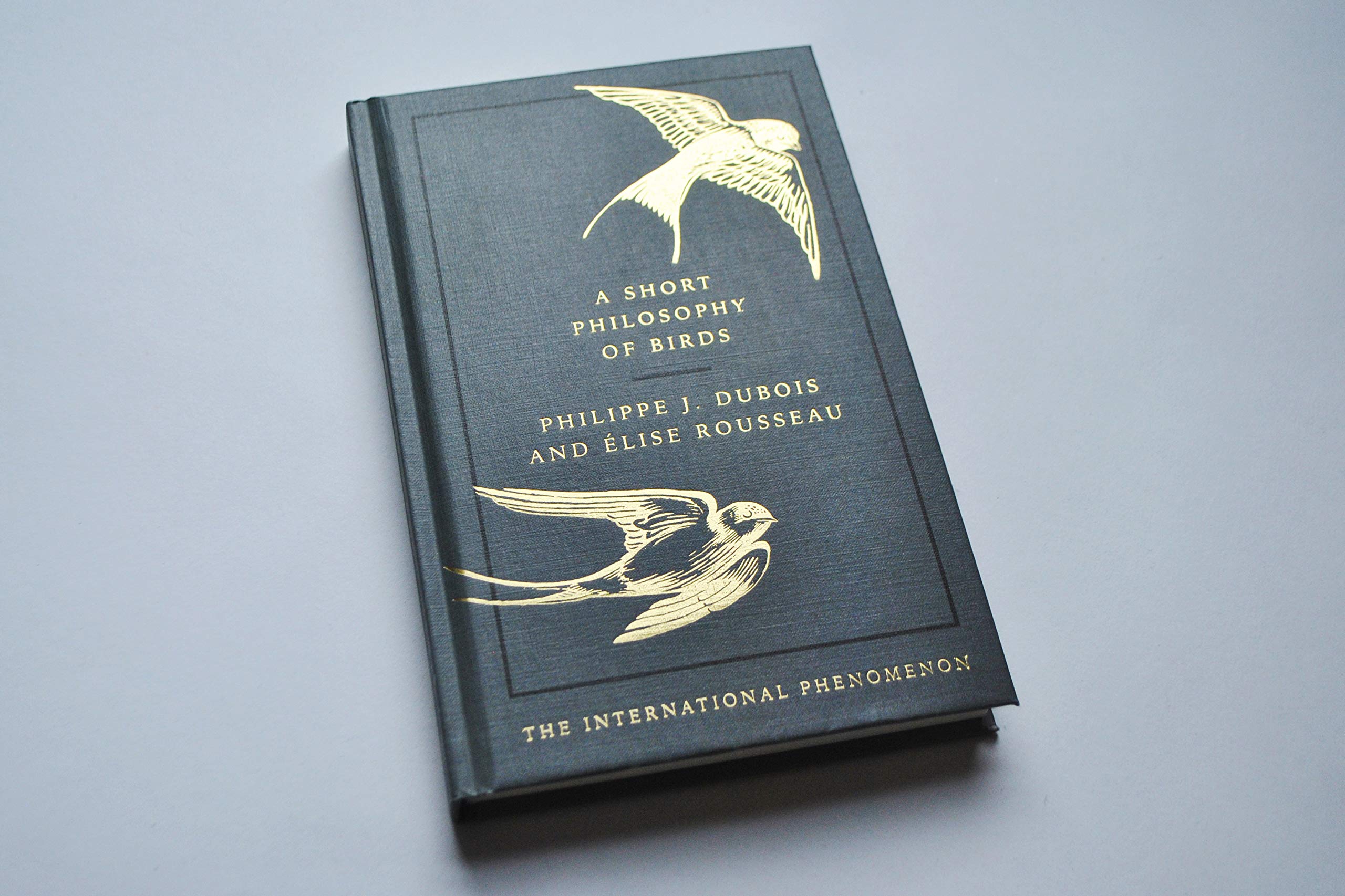
Photo:Amazon
‘We often need help from those smaller than us. Having spent a lifetime watching birds, Philippe and Élise – a French ornithologist and a philosopher – draw out the secret lessons that birds can teach us about how to live, and the wisdom of the natural world. Along the way you’ll discover why the robin is braver than the eagle, what the arctic tern can teach us about the joy of travel, and whether the head or the heart is the best route to love (as shown by the mallard and the penguin). By the end you will feel more in touch with the rhythms of nature and have a fresh perspective on how to live the fullest life you can.’
About the Authors
Philippe J. Dubois is an ornithologist and writer. He has been passionate about birds since he was a boy, and has travelled the world birdwatching. He is the author of a number of works on climate change and biodiversity and was the head of Delachaux and Niestlé, the oldest nature books publishing house in France.
Élise Rousseau has degrees in Literature and Philosophy, and is a journalist and author of several works on nature and animals. She has spent several years working to protect animals.
'Brilliant, magical and engrossing – I will never see birds the same way again.'- Peter Wohlleben, bestselling author of THE HIDDEN LIFE OF TREES
'A little gem. So much wisdom to be drawn from the feathered world of birds.' ― Raynor Winn, bestselling author of THE SALT PATH
'A charming, witty and thought-provoking look at the way bird behaviour can both reflect and influence the way we live our lives.' ― Stephen Moss (Naturalist and author)
'This little book does a beautiful job of inspiring awe for the capacities of birds and applying lessons from their lives to the struggles of humanity.' ― Wall Street Journal
It Takes a Wise Bird to Show Us the Path
Simorgh: Thirty Birds
The Wise Mythical Bird of Persia

‘In the famous epic Persian poem "Conference of the Birds," the birds of the world gather to decide who is to be their king. The hoopoe, the wisest of them all, suggests that they should find the legendary Simorgh, a mythical Persian bird. The hoopoe leads the birds, each of whom represent a human fault which prevents man from attaining enlightenment. When the group of thirty birds finally reach the dwelling place of the Simorgh, all they find is a lake in which they see their own reflection. They realize that they were the Simorgh (which in Persian literally means "thirty birds") all along. The leader they sought was each and every one of them.’
The Conference of the Birds - Simorgh, portrayed by Attar, The Persian Sufi Sage and Poet
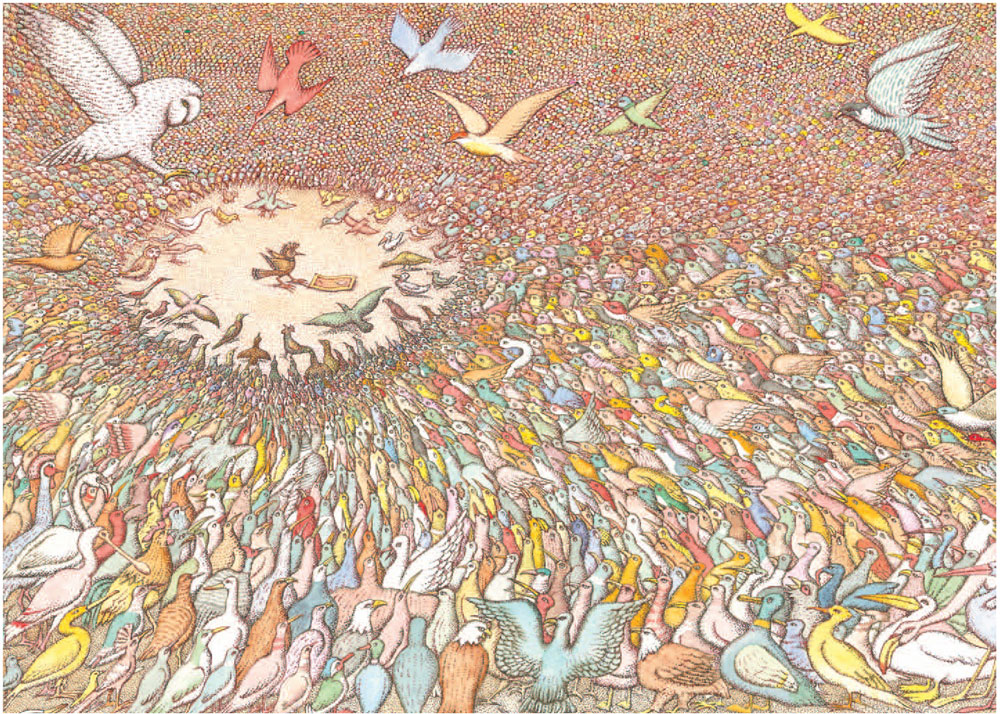
Conference of the Birds.- Photo: images-amazon.com
‘Hundreds of birds embark on a perilous journey across seven treacherous valleys in search of a king who can right the wrongs in their world. They are led by the poet Attar, who has been transformed into a sharp-beaked, crested hoopoe. The troubles that spur them into flight — "Anarchy — discontent — upheaval! Desperate fights over territory, water, and food! Poisoned air! Unhappiness!" — are of course all too familiar in our world.’
Let the Wise Simorgh Brighten and Show You the Way
Stop, Look and Listen:
Learn from the Wise and Listen to the Birds
Photo:LiveYourNature
Listen and Learn from the Wise Ones!
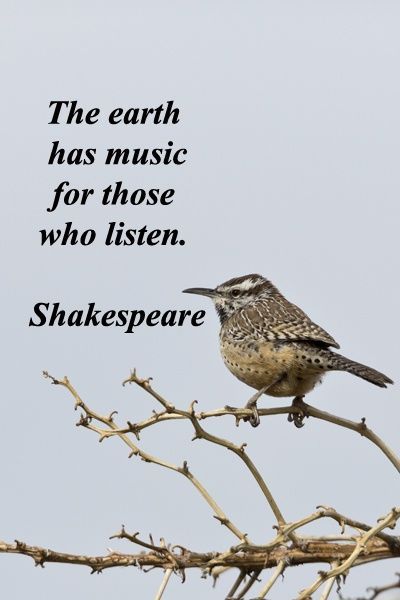
Photo: pinterest
See also:
How to Read a Bird: A smart guide to what birds do and why
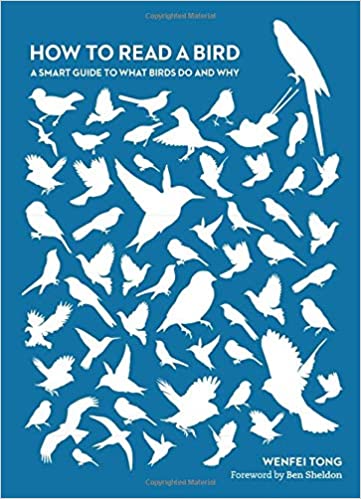
Photo and info: How to Read a Bird: A smart guide to what birds do and why
12 Birds to Save Your Life: Nature's Lessons in Happiness

Photo and info: 12 Birds to Save Your Life: Nature's Lessons in Happiness
- Details
- Written by: Kamran Mofid
- Hits: 1949
That nobleman was George Perkins Marsh (March 15, 1801 – July 23, 1882), an American diplomat and philologist, considered by many to be America's
first environmentalist and an early advocate for wilderness conservation and sustainability.
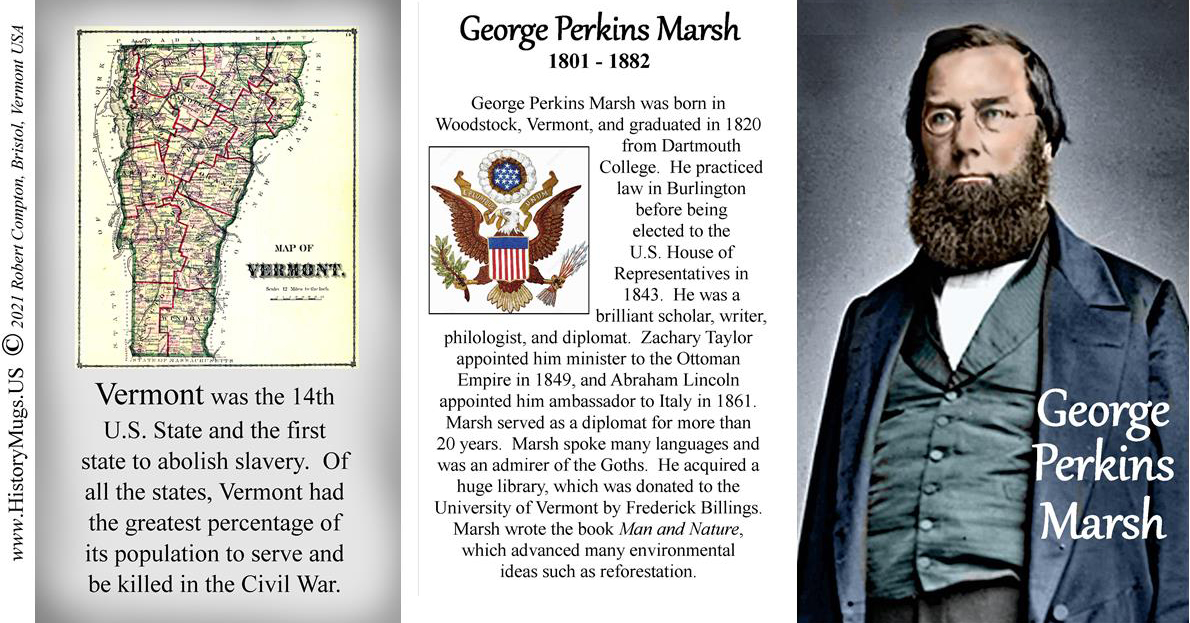
‘On September 30, 1847, Congressman George Perkins Marsh delivered a speech on agricultural conditions in New England to the Agricultural Society of Rutland County, Vermont. This powerful address gave voice to ideas that would become a catalytic force in the movement to conserve America’s natural resources. Marsh recognized the human capacity for destruction of the environment and advocated better management of resources and active efforts toward restoration of the land—innovative ideas for the period.
‘But though man cannot at his pleasure command the rain and the sunshine, the wind and frost and snow, yet it is certain that climate itself has in many instances been gradually changed and ameliorated or deteriorated by human action.’+
His Book- Man and Nature, first published in 1864 was perhaps a century ahead of its time,
when and where he emphatically made the case that man was doing great damage to the environment.
‘The 1847 lecture that predicted human-induced climate change.’
Leo Hickman, Via The Guardian
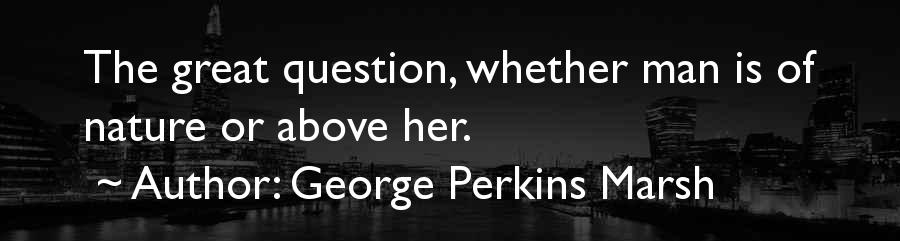
Photo:QuotesSayings
‘When we think of the birth of the conservation movement in the 19th century, the names that usually spring to mind are the likes of John Muir and Henry David Thoreau, men who wrote about the need to protect wilderness areas in an age when the notion of mankind's "manifest destiny" was all the rage.
But a far less remembered American - a contemporary of Muir and Thoreau - can claim to be the person who first publicised the now largely unchallenged idea that humans can negatively influence the environment that supports them.
George Perkins Marsh (1801-1882) certainly had a varied career. Here's how Clark University in Massachusetts, which has named an institute in his memory, describes him:
Throughout his 80 years Marsh had many careers as a lawyer (though, by his own words, "an indifferent practitioner"), newspaper editor, sheep farmer, mill owner, lecturer, politician and diplomat. He also tried his hand at various businesses, but failed miserably in all - marble quarrying, railroad investment and woolen manufacturing. He studied linguistics, knew 20 languages, wrote a definitive book on the origin of the English language, and was known as the foremost Scandinavian scholar in North America. He invented tools and designed buildings including the Washington Monument. As a congressman in Washington (1843-49) Marsh helped to found and guide the Smithsonian Institution. He served as US Minister to Turkey for five years where he aided revolutionary refugees and advocated for religious freedom. He spent the last 21 years of his life (1861-82) as US Minister to the newly United Kingdom of Italy.
In other words, he kept himself busy. But I would argue his defining moment came on 30 September, 1847, when, as a congressman for the Whig party (a forerunner of the Republican party), he gave a lecture to the Agricultural Society of Rutland County, Vermont. (The speech was published a year later.) It proved to be the intellectual spark that led him to go on and publish in 1864 his best-known work, Man and Nature: Physical Geography as Modified by Human Action.
More than 160 years on, it really does pay to re-read his speech as it seems remarkably prescient today. It also shows that he was decades ahead of most other thinkers on this subject. After all, he delivered his lecture a decade or more before John Tyndall began to explore the thesis that slight changes in the atmosphere's composition could cause climatic variations. And it was a full half a century before Svante Arrhenius proposed that carbon dioxide emitted by the "enormous combustion of coal by our industrial establishments" might warm the world (something he thought would be beneficial).
Yes, in his speech, Marsh talks about "civilised man" and "savages" – and the language is turgid in places – but let's cut him a little slack: this was 1847, after all. It's about halfway through he gets to the bit that matters most to us today:
Man cannot at his pleasure command the rain and the sunshine, the wind and frost and snow, yet it is certain that climate itself has in many instances been gradually changed and ameliorated or deteriorated by human action. The draining of swamps and the clearing of forests perceptibly affect the evaporation from the earth, and of course the mean quantity of moisture suspended in the air. The same causes modify the electrical condition of the atmosphere and the power of the surface to reflect, absorb and radiate the rays of the sun, and consequently influence the distribution of light and heat, and the force and direction of the winds. Within narrow limits too, domestic fires and artificial structures create and diffuse increased warmth, to an extent that may effect vegetation. The mean temperature of London is a degree or two higher than that of the surrounding country, and Pallas believed, that the climate of even so thinly a peopled country as Russia was sensibly modified by similar causes.
Some of the terminology he uses is clearly a little archaic to our ears today, but, broadly speaking, his hunch has subsequently proved to be correct. You can see him grappling with concepts that we now know as the urban heat island effect and greenhouse effect.
But in the speech he also called for a more thoughtful approach to consuming natural resources, despite the apparent near-limitless abundance on offer across the vast expanses of northern America. As the Clark University biography notes, he wasn't an environmental sentimentalist. Rather, he believed that all consumption must be reasoned and considered, with the impact on future generations always kept in mind: he was making the case for what we now call "sustainable development". In particular, he argued that his audience should re-evaluate the worth of trees:
'The increasing value of timber and fuel ought to teach us that trees are no longer what they were in our fathers' time, an incumbrance. We have undoubtedly already a larger proportion of cleared land in Vermont than would be required, with proper culture, for the support of a much greater population than we now possess, and every additional acre both lessens our means for thorough husbandry, by disproportionately extending its area, and deprives succeeding generations of what, though comparatively worthless to us, would be of great value to them.
The functions of the forest, besides supplying timber and fuel, are very various. The conducting powers of trees render them highly useful in restoring the disturbed equilibrium of the electric fluid; they are of great value in sheltering and protecting more tender vegetables against the destructive effects of bleak or parching winds, and the annual deposit of the foliage of deciduous trees, and the decomposition of their decaying trunks, form an accumulation of vegetable mould, which gives the greatest fertility to the often originally barren soils on which they grow, and enriches lower grounds by the wash from rains and the melting snows.
The inconveniences resulting from a want of foresight in the economy of the forest are already severely felt in many parts of New England, and even in some of the older towns in Vermont. Steep hill-sides and rocky ledges are well suited to the permanent growth of wood, but when in the rage for improvement they are improvidently stripped of this protection, the action of sun and wind and rain soon deprives them of their thin coating of vegetable mould, and this, when exhausted, cannot be restored by ordinary husbandry. They remain therefore barren and unsightly blots, producing neither grain nor grass, and yielding no crop but a harvest of noxious weeds, to infest with their scattered seeds the richer arable grounds below.
But this is by no means the only evil resulting from the injudicious destruction of the woods. Forests serve as reservoirs and equalizers of humidity. In wet seasons, the decayed leaves and spongy soil of woodlands retain a large proportion of the falling rains, and give back the moisture in times of drought, by evaporation or through the medium of springs. They thus both check the sudden flow of water from the surface into the streams and low grounds, and prevent the droughts of summer from parching our pastures and drying up the rivulets which water them.
On the other hand, where too large a proportion of the surface is bared of wood, the action of the summer sun and wind scorches the hills which are no longer shaded or sheltered by trees, the springs and rivulets that found their supply in the bibulous soil of the forest disappear, and the farmer is obliged to surrender his meadows to his cattle, which can no longer find food in his pastures, and sometime even to drive them miles for water.
Again, the vernal and autumnal rains, and the melting snows of winter, no longer intercepted and absorbed by the leaves or the open soil of the woods, but falling everywhere upon a comparatively hard and even surface, flow swiftly over the smooth ground, washing away the vegetable mould as they seek their natural outlets, fill every ravine with a torrent, and convert every river into an ocean. The suddenness and violence of our freshets increases in proportion as the soil is cleared; bridges are washed away, meadows swept of their crops and fences, and covered with barren sand, or themselves abraded by the fury of the current, and there is reason to fear that the valleys of many of our streams will soon be converted from smiling meadows into broad wastes of shingle and gravel and pebbles, deserts in summer, and seas in autumn and spring.
The changes, which these causes have wrought in the physical geography of Vermont, within a single generation, are too striking to have escaped the attention of any observing person, and every middle-aged man, who revisits his birth-place after a few years of absence, looks upon another landscape than that which formed the theatre of his youthful toils and pleasures. The signs of artificial improvement are mingled with the tokens of improvident waste, and the bald and barren hills, the dry beds of the smaller streams, the ravines furrowed out by the torrents of spring, and the diminished thread of interval that skirts the widened channel of the rivers, seem sad substitutes for the pleasant groves and brooks and broad meadows of his ancient paternal domain.
If the present value of timber and land will not justify the artificial replanting of grounds injudiciously cleared, at least nature ought to be allowed to reclothe them with a spontaneous growth of wood, and in our future husbandry a more careful selection should be made of land for permanent improvement. It has long been a practice in many parts of Europe, as well as in our older settlements, to cut the forests reserved for timber and fuel at stated intervals. It is quite time that this practice should be introduced among us.
After the first felling of the original forest it is indeed a long time before its place is supplied, because the roots of old and full grown trees seldom throw up shoots, but when the second growth is once established, it may be cut with great advantage, at periods of about twenty-five years, and yields a material, in every respect but size, far superior to the wood of the primitive tree. In many European countries, the economy of the forest is regulated by law; but here, where public opinion determines, or rather in practice constitutes law, we can only appeal to an enlightened self-interest to introduce the reforms, check the abuses, and preserve us from an increase of the evils I have mentioned.’- First published in the Guardian on 20 June 2011
+George Perkins Marsh, Library of Congress
Learn more about George Perkins Marsh
See also George Perkins Marsh Institute
Man and Nature: George Perkins Marsh
Author: David Lowenthal
A lesson for our times
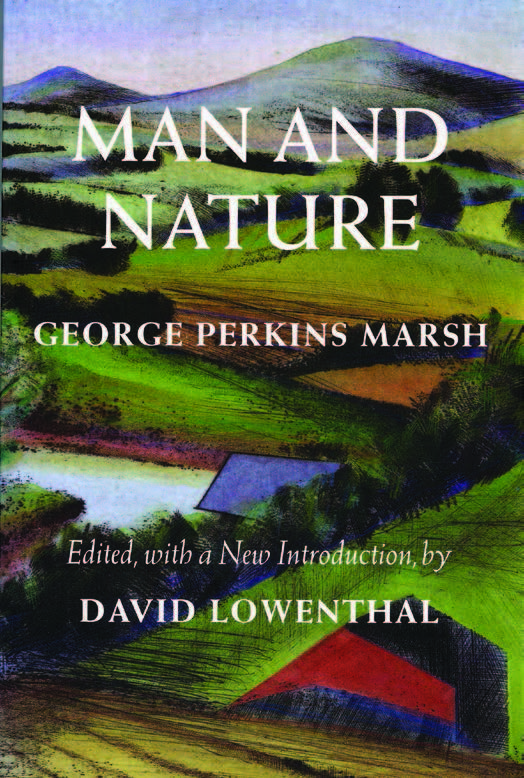
“George Perkins Marsh's Man and Nature was the first book to attack the American myth of the superabundance and the inexhaustibility of the earth. It was, as Lewis Mumford said, "the fountainhead of the conservation movement," and few books since have had such an influence on the way men view and use land. "It is worth reading after a hundred years," Mr. Lowenthal points out, "not only because it taught important lessons in its day, but also because it still teaches them so well...Historical insight and contemporary passion make Man and Nature an enduring classic."
‘This was the essence of a densely written book, Man and Nature; or, Physical Geography as Modified by Human Action, published in 1864 in New York and London. It wasn’t much anticipated, and the author, George Perkins Marsh, a former congressman from Vermont, was little known. Yet it went on to be an international bestseller, was translated into multiple languages, was repeatedly updated in expanded editions, and is now generally recognized to be one of the most important books ever published. Its arguments were a major factor in the creation of the Forest Preserve…
‘When the forest is gone, the great reservoir of moisture stored up in its vegetable mould is evaporated, and returns only in deluges of rain to wash away the parched dust into which that mould has been converted,” Marsh wrote. Springs dry up, soils erode, ecological communities deteriorate, and agriculture fails; everything dependent on the stable regime protected by forests and a reliable watershed—in other words, civilization itself—is at risk. The decline of the Roman Empire, he concluded, was at least partially attributable to “man’s ignorant disregard of the laws of nature…’-Continue to read:Desperately seeking Sophia: The Wisdom of Nature
And now a selection of similar readings from our archive for your interest
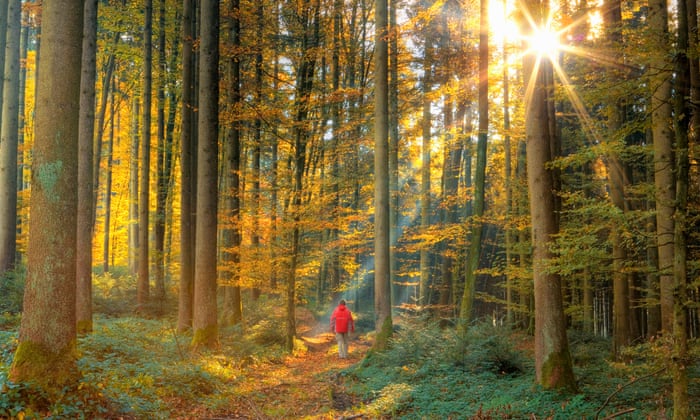
Photo: Travelpix Ltd/Getty Images, Via The Guardian
The Wisdom of Mother Nature belongs to all Life.
Let be guided and inspired by Her and Save the Web of Life
‘Nature and Me’: Realigning and Reconnecting with Mother Nature’s Wisdom- A Five Part Guide
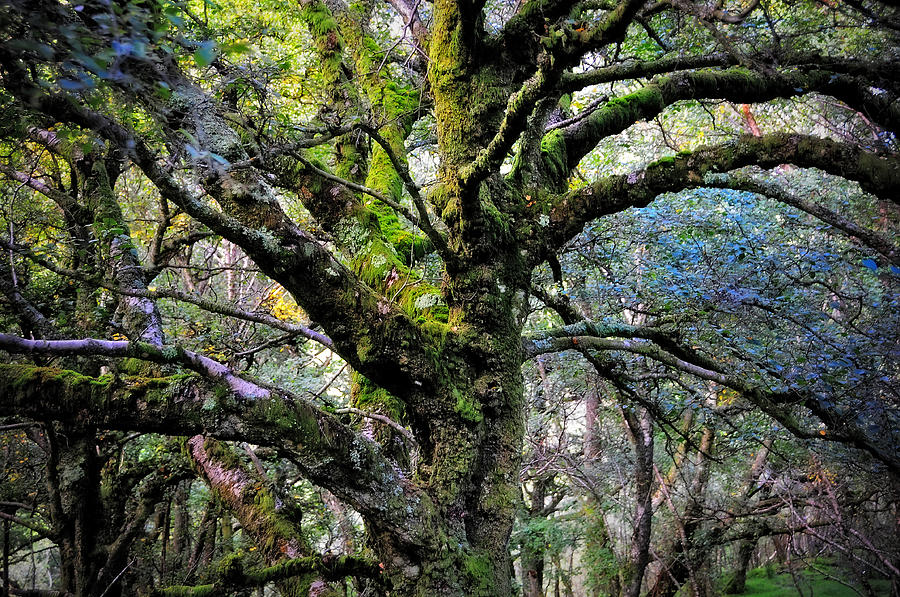
The Tree of Wisdom, Old whimsical tree in the Wicklow forest, Ireland.- Photo by Jenny Rainbow: fineartamerica.com
- Details
- Written by: Kamran Mofid
- Hits: 1647
‘The Enlightenment philosopher’s attack on cosmopolitan élites now seems prophetic.’
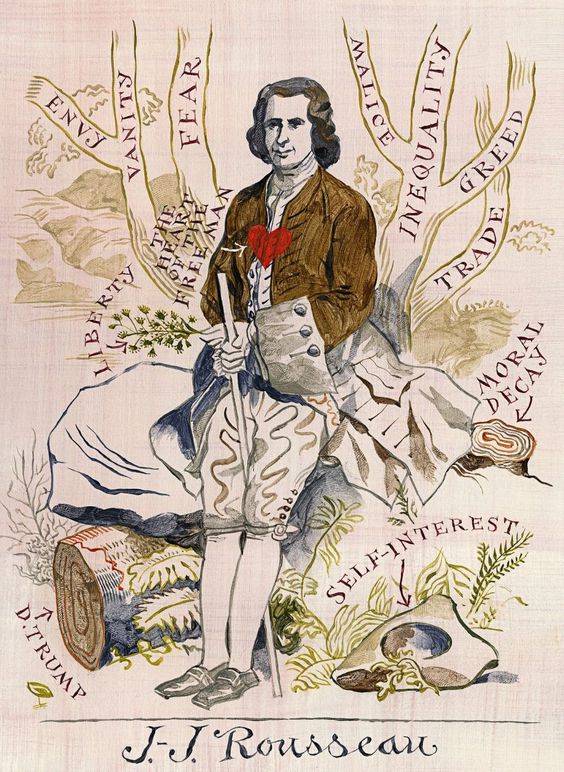
'Rousseau’s lowly background made him the Enlightenment’s great outsider.'
ILLUSTRATION BY JEFFREY FISHER, Via The New Yorker
…’Rousseau “the most original genius of his age—so original that most people at the time could not begin to appreciate how powerful his thinking was.”- Leo Damrosch in his biography of Rousseau “Restless Genius” (2005)
…’that a society built around self-interested individuals will necessarily lack a common morality.’- István Hont, in “Politics in Commercial Society,” a comparative study of Rousseau and Adam Smith.
Down With Élites!
The economic losers, the ‘left-behind’ have revolted against the elites everywhere

Photo: Financial Times
‘The projects of the rightwing elite have long been low marginal tax rates, liberal immigration, globalisation, curbs on costly “entitlement programmes”, deregulated labour markets and maximisation of shareholder value. The projects of the leftwing elite have been liberal immigration (again), multiculturalism, secularism, diversity, choice on abortion, and racial and gender equality. Libertarians embrace the causes of the elites of both sides; that is why they are a tiny minority.’- Martin Wolf, Financial Times, 26 January 2016
'How Rousseau Predicted Trump’
Understanding the anti-elite Trump vote

Photo: Blogs LSE
'In the course of nearly twenty books, Rousseau amplified his objections to intellectuals and their rich patrons, who presumed to tell other people how to live. Rousseau did share a crucial assumption with his adversaries: that the age of clerical tyranny and divinely sanctioned monarchy was being replaced by an era of escalating egalitarianism. But he warned that the bourgeois values of wealth, vanity, and ostentation would impede rather than advance the growth of equality, morality, dignity, freedom, and compassion. He believed that a society based on envy and the power of money, though it might promise progress, would actually impose psychologically debilitating change on its citizens.’
‘The triumphs of capitalist imperialism in the nineteenth century, and of economic globalization after the Cold War, fulfilled on a grand scale the Enlightenment dream of a worldwide materialist civilization knit together by rational self-interest. Voltaire proved to be, as Nietzsche presciently wrote, the “representative of the victorious, ruling classes and their valuations,” while Rousseau looked like a sore loser. Against today’s backdrop of political rage, however, Rousseau seems to have grasped, and embodied, better than anyone the incendiary appeal of victimhood in societies built around the pursuit of wealth and power.’
‘The recent explosions of resentment against writers and journalists as well as against politicians, technocrats, businessmen, and bankers reveal how Rousseau’s history of the human heart is still playing itself out among the disaffected. The Jacobins and the German Romantics may have been Rousseau’s most famous and influential disciples, but Rousseau’s claim that the metropolis was a den of vice and that virtue resided in ordinary people makes for a perpetually renewable challenge—from the right and the left—to our imperfect political and economic arrangements. It is the uprooted people with Rousseau’s complex wounds who have periodically made and unmade the modern world with their demands for radical equality and cravings for stability. There will be many more of them, it is safe to say, as billions of young people in Asia and Africa negotiate the maelstrom of progress.’
‘I love the poorly educated,” Donald Trump said during a victory speech in February, and he has repeatedly taken aim at America’s élites and their “false song of globalism.” Voters in Britain, heeding Brexit campaigners’ calls to “take back control” of a country ostensibly threatened by uncontrolled immigration, “unelected élites,” and “experts,” have reversed fifty years of European integration. Other countries across Western Europe, as well as Israel, Russia, Poland, and Hungary, seethe with demagogic assertions of ethnic, religious, and national identity. In India, Hindu supremacists have adopted the conservative epithet “libtard” to channel righteous fury against liberal and secular élites. The great eighteenth-century venture of a universal civilization harmonized by rational self-interest, commerce, luxury, arts, and science—the Enlightenment forged by Voltaire, Montesquieu, Adam Smith, and others—seems to have reached a turbulent anticlimax in a worldwide revolt against cosmopolitan modernity…’Continue to read: - Pankaj Mishra, How Rousseau Predicted Trump, in The New Yorker, 1 August 2016
A selected of similar readings for your interest:
‘Two famous philosophers can help us understand Donald Trump's popularity: Jean-Jacques Rousseau and Adam Smith.’
Rousseau was noted above. Below is a reflection on Adam Smith
‘While they differed in many ways, both Rousseau and Smith were acutely interested in the relationship between rich and poor that was emerging in 18th century commercial society. Both argued that growing inequality threatened to undermine social harmony. And their respective analyses diverge in ways that are useful in understanding Trump's appeal.
‘Adam Smith is best known today as the godfather of the modern free-market system, as outlined in his "Wealth of Nations." But Smith built his academic reputation on his 1759 treatise, "Theory of Moral Sentiments," which aimed to understand what motivates individual behavior, known as the study of moral psychology. In a fascinating passage, he notes a reverence for the rich that borders on obsequiousness. He claims that it is the inclination of many common people "to admire, and almost to worship, the rich and powerful." Elsewhere in the same treatise, he writes that the material benefits of the upper class "can extend but to a few; but their fortunes interest almost everybody."
‘Smith reasons that most people assume that the wealthy and powerful have great talent and efforts-and that we imagine that with a little more effort on our part, we could be just like them.
‘To be sure, there have been plenty of other wealthy presidential candidates. But none has made his or her wealth so central to the candidacy, citing personal fortune as a primary qualification. Trump repeatedly sells himself as being worthy specifically because he is worth, he claims, "more than $10 billion." Smith argues that this kind of wealth, especially in ostentatious display, garners wide admiration. In this view, Trump's populist statements are mere window-dressing for his greatest asset: his assets.
‘Smith did not consider this admiration for the rich to be a virtue. Indeed, he worried that an instinctive love of the wealthy was "the great and most universal cause of the corruption of our moral sentiments." He argued that it fuels the already substantial vanity of the rich and the unmerited shame of the poor. This vanity would persuade the rich that they were above the laws, which could inspire the poor to abandon their admiration for the rich and take up arms against them…’- Continue to read
A Must Read Book about how Adam Smith can change your life for better
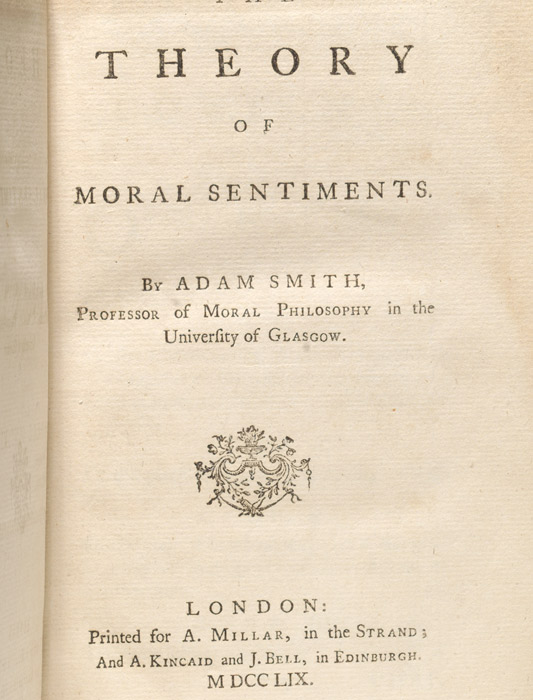
SMITH, Adam. The Theory of Moral Sentiments. London: Printed for A. Millar, in the Strand; A. Kincaid and J. Bell,
in Edinburgh, 1759.-Photo:baumanrarebooks.com
See also:
Imaging a Better World: Moving forward with the real Adam Smith
Adam Smith and the Pursuit of Happiness
Economics, Globalisation and the Common Good: A Lecture at London School of Economics
- The inhumanity and inefficiency of the privatised and for profit justice reconfirmed
- ‘Nature and Me’: Realigning and Reconnecting with Mother Nature’s Wisdom- A Five Part Guide
- ‘Nature and Me’: ‘Nature as a Cure for the Sickness of Modern Times’
- ‘Nature and Me’: ‘200 words to protect the planet’
- 'Nature and Me': Unlocking a New Vision for a Better World