- Details
- Written by: Kamran Mofid
- Hits: 3260
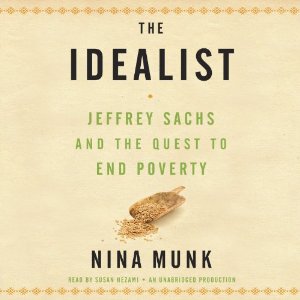
Photo: amazon.com
The Idealist: Jeffrey Sachs and the Quest to End Poverty
By Nina Munk
‘The Not-So-Great Professor: Jeffrey Sachs' Incredible Failure to Eradicate Poverty in Africa’*
By Howard W. French
‘Jeffrey Sachs was certain he knew how to rid the world of poverty. He even said it would be easy. The world had other ideas.’
The early sections of Nina Munk’s book about the economist Jeffrey Sachs read like a celebration of a boy genius. No, strike that: Sachs piles up so many achievements so quickly that the word genius sounds somehow inadequate.
By the age of 13, he was taking college math. Later, he got near-perfect scores on his SATs and graduated summa cum laude from Harvard, where by 28 he was a tenured professor. Two years later, he was advising the Bolivian government on how to administer economic “shock therapy,” designed to break the spell of hyperinflation. This led to an even bigger triumph: masterminding Poland’s transition to a market economy in 1989, as communism collapsed in Eastern Europe.
Today, though, Sachs is best known for his obsession with the noble idea of ending global poverty “once and for all.” In his 2005 best seller, The End of Poverty, he argued that with proper planning and funding, extreme poverty could be wiped off the Earth by 2025.
- Details
- Written by: Kamran Mofid
- Hits: 2748
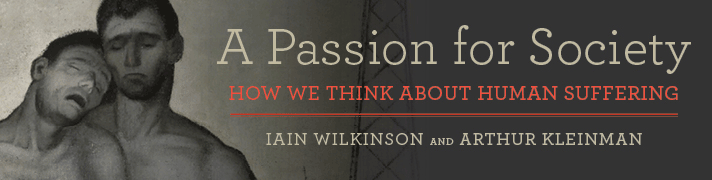
Photo: ucpress.edu
Publication Announcement
- Publication title: A Passion for Society: How We Think about Human Suffering
- Author: Iain Wilkinson, Arthur Kleinman
- Publication type: Book (Hardback)
- Number of pages: 328
- ISBN number: 9780520287228
- Price: 65 USD-44.95 GBP British Pounds
‘Millions of people experience social suffering in their everyday lives. But how should we venture to understand these brute facts of modern existence? How do they impact upon our cultural beliefs, political outlooks and moral behaviours?
In a new book, entitled A Passion for Society: How We Think About Human Suffering, Dr Iain Wilkinson, of the University of Kent, and co-author Professor Arthur Kleinman, of Harvard University, examine the moral experience and public portrayal of human suffering and how these have changed through modern times.
- Details
- Written by: Kamran Mofid
- Hits: 9514
‘In Search of the Light to Change the World’
School of Economic Science, London
Economics with Justice Lecture Series
Saturday 6 February 2016
Prof. Kamran Mofid
ABSTRACT
“Everyone thinks of changing the world, but no one thinks of changing himself.”- Leo Tolstoy
It is normal to harbour a wish to lead a meaningful life which has a beneficial impact on those around us. However grand it might sound, wanting to 'change the world' is a proper and mature ambition.
However, have you ever stopped for a moment and asked yourself “Who are we? Why are we here? What is our purpose? Is this all there is to life? Can we live without heatred, revenge, war, poverty and destruction? Can we remember but forgive and recocile? Is the destruction of our planet inevitable? Will greed and inequality always be a part of life?”
If we want to change the world for the better, we must- first and foremost- begin by identifying with our core humane values- fairness, peace, stability, beauty, wisdom, kindness, sympathy, empathy, resilience, whatever.
We live in a world today a washed with PhDs, MBAs, and experts of all sorts and still we destroy the planet, kill each other at wars, engage in acts of violence and terrorism, and sink deeper in more abject poverty and inequality, whilst abusing all life’s gifts and resources with the never ending economic growth and debt.
Therefore, do we really need more experts and authorities to rely on to tell us what is going on, or can we finally trust our own ability to observe our society and think critically ourselves about what is needed for change?
If you are interested in understanding human society without- all the usual political and economic mumbo jumbo- and if you wonder what is this life all about, yet not fully satisfied with what is on offer currently, then you might enjoy participating in this dialogical lecture and conversation, co-creating the conditions for a meaningful change in our world.
My aim is to assist in seeing the world with a fresh pair of eyes. This is what I feel is needed to open our minds enough to empower and enable us to build the better world we all wish to see.
‘In Search of the Light to Change the World’
Thank you very much for your very kind words of welcome. It is always a pleasure to be back at School of Economic Science. What you do and what you believe in is very close to my heart. It is my pleasure that the GCGI and the SES are cooperating in some projects, notably our joint conferences at Waterperry House.
As for my lecture today, I wish to begin by noting that to my understanding:
The world's leading economies and those who follow and copy them, are facing not just one but many crises. The financial meltdown is not over, indeed many believe it is getting deeper and a further one is just round the corner; climate change threatens major global disruption, economic inequality has reached extremes not seen for a century, and government and business are widely distrusted. There is corruption everywhere, in everything, in all sectors.
There are also wars and conflicts and acts of terrorism- by states and individuals alike, everywhere, resulting in the mass movements of people across the seas and continents. At the same time, many people regret the consumerism and social corrosion of modern life.
In all, we are witnessing the destructive rise in globalisation of extremism and what these crises have in common, I believe, is a reckless disregard for the future--especially in the way the economy is run.
Not only we have destroyed the beauty and the wonders of the now, this present moment, we have also destroyed the possibilities of a better future. How can we achieve the financial growth we need today without sacrificing a decent future for our children, our societies, and our planet? How can we realize an economy, life, happiness, peace, justice and well-being for the common good now and sustain it for the future too? These are surly some of the pertinent questions that we should all collectively be asking and thinking about.
As I was reflecting on the title and the theme for my talk today, I came across a most beautiful and relevant quote from Confucius: “Better to Light one small Candle than to curse the darkness.”
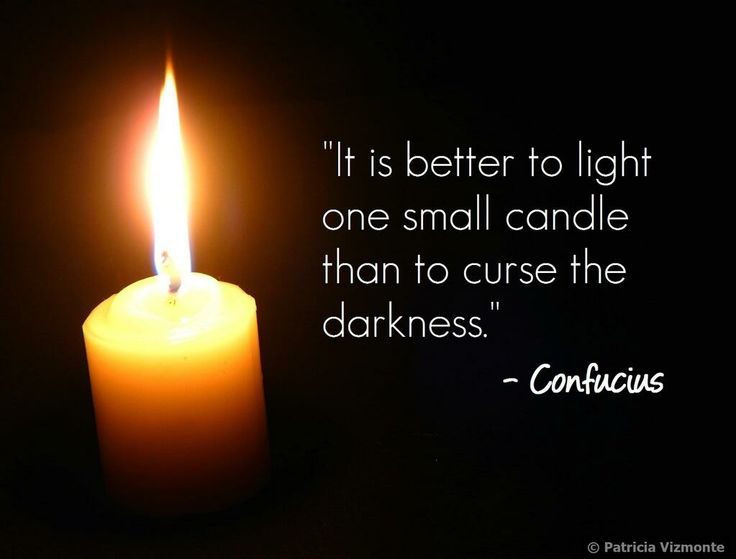
Just for a moment imagine what our lives would look like if there were no lights. Suppose there were no sun, no moon, no stars, no electricity, and no candles to light - just darkness. What kind of world, what kind of life that would be?
It would, for sure, be a dark, dreary, cold, and cheerless world. We could not see all the beautiful things around us, the pitfalls in front of us, and we could not find our way.
All in all, we can light a candle, no matter how small its flame might be, which breaks into the darkness and brings hope into our lives. We are not helpless and it is always worthwhile taking the first step to do something good and loving in the face of everyday injustice or disappointment in this world that has fallen into darkness, tearing itself apart into hopeless pieces, wars, conflicts, bombs, destruction, revenge and more revenge.
By aiming to be a source of hope and inspiration we can be empowered to move from despair to hope, darkness to light and competition to cooperation, we will experience the joy of inner peace and contentment when we take the first step and light that candle. “When we are dreaming alone it is only a dream. When we are dreaming together it is the beginning of reality.”
Now let us discover if we shine, or indeed how we may shine?
Let me begin by reading you a couple of quotes from a man who has captured our imagination more than ever before with the adaptation of his epic book- War and Peace- in a new series by the BBC, Leo Tolstoy:
“Everyone thinks of changing the world, but no one thinks of changing himself.”
“I sit on a man's back; choking him and making him carry me, and yet assure myself and others that I am very sorry for him and wish to ease his lot by all possible means -- except by getting off his back.”
It is normal to harbour a wish to lead a meaningful life which has a beneficial impact on those around us. However grand it might sound, wanting to 'change the world' is a proper and mature ambition.
However, have you ever stopped for a moment and asked yourself “Who are we? Why are we here? What is our purpose? Is this all there is to life? Can we live without heatred, revenge, war, poverty and destruction? Can we remember but forgive and recocile? Is the destruction of our planet inevitable? Will greed and inequality always be a part of life?”
If we want to change the world for the better, we must- first and foremost- begin by identifying with our core humane values- fairness, peace, stability, beauty, wisdom, kindness, sympathy, empathy, resilience, whatever.
We live in a world today awashed with PhDs, MBAs, and experts of all sorts and still we destroy the planet, kill each other at wars, engage in acts of violence and terrorism, and sink deeper in more abject poverty and inequality, whilst abusing all life’s gifts and resources with the never ending economic growth and debt.
Therefore, do we really need more experts and authorities to rely on to tell us what is going on, or can we finally trust our own ability to observe our own society and think critically ourselves about what is needed for change?
This reminds me of a beautiful and timely story from the land of my birth, Persia. Let me share it with you:
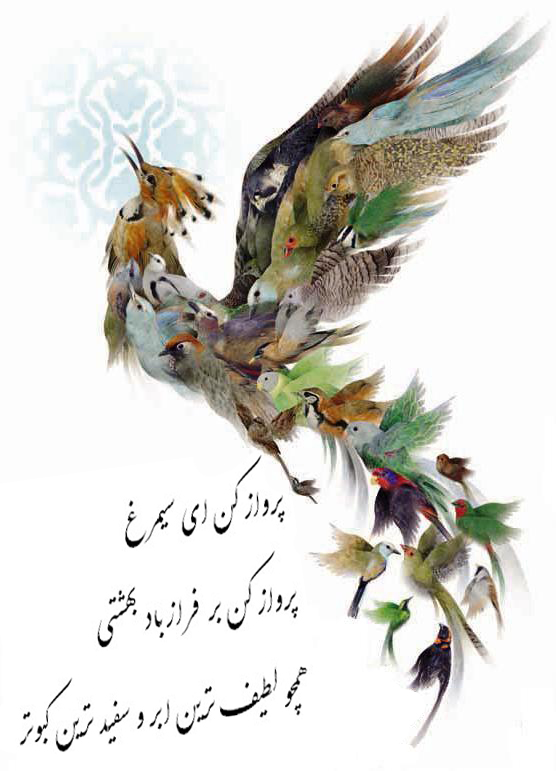
Simorgh: Thirty Birds
‘In the famous epic Persian poem "Conference of the Birds," by Farid ud-Din Attar the birds of the world gather to decide who is to be their king. The hoopoe, the wisest of them all, suggests that they should find the legendary Simorgh, a mythical Persian bird, whilst leading the birds, each of whom representing a human fault which prevents man from attaining enlightenment. When the group of thirty birds finally reach the dwelling place of the Simorgh, all they find is a lake in which they see their own reflection. They realize that they were the Simorgh (which in Persian literally means "thirty birds") all along. The leader they sought was each and every one of them.’
I believe Attar’s classic Persian story can teach us a lot about the principles of vision, participation, values-led and collective leadership we must embody in order to build a better and more harmonious world.
We need to rediscover our true humane values. Then, we can all become the leaders we are hoping for, to lead us to a better world.
So, here, I want to share with you what Attar has to offer on collective leadership, love and spirituality- so much missing today and so much needed to enable us together to build a better world: A world for the common good. These are the seeds that Attar and others like him have planted, and have germinated over centuries, growing into a garden into which you are about to step into.
Paraphrasing the wise and beautiful words of Attar, I hope you will receive my offerings today in Attar’s spirit of love and humility:
“Now I am made one with You and from that Union my heart is consumed with rapture and my tongue is bewildered. By union, I have been merged in the Unity, I am become altogether apart from all else. I am You and You are I - nay, not I, all is altogether You. I have passed away, ‘I’ and ‘You’ no more exist. We have become one and I have become altogether You”
OK. Now let me begin the story of “In Search of the Light to Change the World”.
I wish to begin by reading you a quote from Alan Rickman, the gentle and accomplished actor whom sadly passed away recently.
"The more we’re governed by idiots and have no control over our destinies, the more we need to tell stories to each other about who we are, why we are, where we come from, and what might be possible".
I truly love this statement. This is something that, I, too, deeply believe in. This is why I wrote Coventry and I: The story of a boy from Iran who became a man in Coventry
You see, storytelling has the capacity to touch our deepest emotions and it can allow us to peer at beauty. We glance at our own creativity and breathe our own thoughts. But more than that: Storytelling is also a wonderful path to set ourselves free, by opening our hearts to others and letting them in; becoming one with one another, as for example Attar has so wisely reminded us.
So today, my friends, ladies and gentlemen, I want me and you together forget about this guy called Prof. Mofid, BA, MA, PhD in economics. These are all meaningless, futile, nothing, if not underpinned, informed and guided by a life journey, stories of transformation, moral, spiritual, personal and professional transformation, a journey to humility and sacrifice, a journey in search of light.
I firmly believe that our crises today are not economic or monetary, but, first and foremost are moral, spiritual and ethical. What we are facing is crisis of values. Therefore, if we are really interested in addressing the global crises, then, this would virtually require that the disciplines such as economics, finance, management, education, health and welfare, business, government, politics, media, whatever, adequately account for the value implications of their work.
One of the issues that I seek to underscore in this talk is a better understanding of the idea of economic consciousness. It would seem to be obvious that economic consciousness influences economic theory and economic practice. In this sense, economic consciousness would seek to have a connection to the idea of Personal consciousness. Therefore, if we wish to have a fairer, kinder and more equal society, economy and community, then, we must have a political and economic system and leadership that values these values too. This, I believe must be obvious to all.
Saint Thomas Aquinas and Aristotle spoke of meaning in life when they respectively noted that: ‘He that seeks the good of the many seeks in consequence his own good’ and ‘What is the essence of life? To serve others and to do good’. Albert Einstein spoke about values when he said: ‘Try not to become a person of success, but rather try to become a person of value.’ The philosopher and theologian Paul Tillich also similarly noted that: ‘We have to build a better man before we can build a better society.’ Gandhi also spoke of meaning in life with his famous phrase: ‘Be the change you wish to see in the world.’ And the wonderful woman Helen Keller noted that ‘the only thing worse than being blind is having sight but no vision.’
This is only a selection – there are thousands of superb quotations and proverbs about values, ethics, morality and spirituality that can be helpful and inspiring to each of us. But finding quotations can also be a bit like looking for needles in a haystack. We also know that humane and humanistic values can change our hearts and nourish our minds – prompting us to take action in the interest of the common good and literally improve the world.
Today, in many parts of the world, the so-called ‘free’ market, the consumerist culture, and ‘Black Friday’ sales, have become increasingly dominant, and are now seriously threatening our global future, both in terms of our care of the planet and in increasing societal rivalry and conflict.
Our crises can only be addressed, reversed and resolved, and our goals can only be achieved, if we change direction, adopt new values and become concerned with life’s bigger picture. If we want to realise anything good in life, including any goals we may set ourselves, we must begin, first and foremost, by focusing on some fundamental and enduring questions of human meaning and value: questions such as:
1. What does it mean to be human?
2. What does it mean to live a life of meaning and purpose?
3. What does it mean to understand and appreciate the natural world?
4. What does it mean to forge a more just society for the common good?
5- In what ways are we living our highest values?
6- How are we working to embody the changes we wish to see in the world?
7- What projects, models or initiatives give us the greatest sense of hope?
8- How can we do well in life by doing good?
By their very nature, these questions involve thought and discussion around spirituality, ethics, morals and values.
This means that our lives are connected not only to knowledge, power and money, but also to faith, love and wisdom. Unless the questions we ask encompass the full spectrum of these emotions and experiences, we’re unlikely to find the answers we are looking for, or to understand them in any depth, let alone solving problems and attaining goals.
In all, how can we become agents of change for the common good? How can we spark a new public conversation framed around human dignity and the common good?
We can begin this journey by beginning to imagine a better world, a world of socio-economic inclusion:
Imagine a political system that puts the public first. Imagine the economy and markets serving people rather than the other way round. Imagine us placing values of respect, fairness, interdependence, and mutuality at the heart of our economy. Imagine an economy that gives everyone their fair share, at least an appropriate living wage, and no zero-hour contracts. Imagine where jobs are accessible and fulfilling, producing useful things rather than games of speculation and casino capitalism. Imagine where wages support lives rather than an ever expanding chasm between the top 1% and the rest. Imagine a society capable of supporting everyone’s needs, and which says no to greed. Imagine unrestricted access to an excellent education, healthcare, housing and social services. Imagine hunger being eliminated, no more food banks and soup kitchens. Imagine each person having a place he/she can call home. Imagine all senior citizens living a dignified and secure life. Imagine all the youth leading their lives with ever-present hope for a better world. Imagine a planet protected from the threat of climate change now and for the generations to come. Imagine no more wars, but dialogue, conversation and non-violent resolution of conflicts.
All in all, in seeking to realise and build this world, we need to discover that the deepest and most difficult questions with which we wrestle are problems of value — right and wrong, beautiful and ugly, just and unjust, worthy or unworthy, dignified or abhorrent, love or hatred, cooperation or competition, selflessness or selfishness, prosperity or poverty, profit or loss.
Human beings have explored these many questions of value through religion, philosophy, the creation of art and literature, and more. Indeed, questions of value have inaugurated many disciplines within the humanities and continue to drive them today. Questions and conversations about values and valuing are fundamental to what it means to be human, but rarely become the subject of explicit public reflection.
Therefore, today, here, in this place of learning, a place of thoughtfulness, wisdom, philosophy, poetry and reflection, I do not wish to be Prof. Kamran Mofid, the economist, but Kamran the storyteller, opening my heart to you, inviting you to come in, becoming one with one another.
I do not claim I know everything. I do not claim I have all the answers. My claim is that what I know I owe it to others, my teachers, masters and gurus. Therefore, I am only:
Sharing the Wisdom of Others with you: I am only a Messenger
I wish you to note that this presentation, harvesting the fruits of contemplation, is offered as a contribution to the public conversation about values and the shaping of the social ethos in which we live: Our moral compass, if you will. My perspective comes from two broad sources: (1) from over sixty years of living in a globalised, diversified communities, in different countries and continents, in the midst of a diverse group of people, from various cultural, ethnic and religious backgrounds; and (2) from thinkers- past and present- who were/are open, fresh and responsive to the human spirit, reflecting deeply on the individual and society. It is fair to say that, their impact on me has been profound. Their wisdom has nourished and nurtured my personal and professional development. For that I am for ever grateful to them.
Moreover, today, our global family is facing a multitude of enduring and potentially catastrophic crises. For me, the answers lie in simplicity. There is no need to complicate matters further. After all, in the wise words of Leonardo da Vinci, “Simplicity is the ultimate sophistication.”
Before I carry on further, let me tell you “What are my educational/teaching ethos& values?”
However, before that let me tell you the story of what I did and say last year at the Graduate Institute in Geneva.
I had received an invitation to talk about the GCGI at an Ethic Forum in Geneva.
Here I want to share with you a little story about when the Forum as a whole visited the Graduate Institute of International and Development Studies in Geneva on the afternoon of 25th of June.
This session was a public forum, open to all, including the general public, students, the youth and all other interested individuals. Present also were high level dignitaries from Geneva and senior city and university officials.
Interesting speeches on values-led education, business, trade, finance, etc were made.
Now, my little story:
After the speeches and during the Q&A session, when invited by the moderator to make comments or ask questions, whilst I had no prior plan to ask any questions or make any comments, somehow, the moderator saw my raised hand.
I got up and allowed my heart, feelings and emotions to guide me in saying the following (as best I can remember now):
I said:
“When I look all around me, it breaks my heart to see despite so many gifts that we have been given in this life, to be happy, to lead a good and worthwhile lives, we have abused these gifts and have created such a miserable world, the world of multiple, continuing and deepening crises. Why?”
I then said:
“When I was a young lad, our elders used to tell us that education is a path to wisdom. Education will empower you to take action in the interest of the common good. It will enable you to build a better world, a world of peace, harmony and prosperity for all.”
I then continued that our elders also used to say that:
“Educators, too, are here to make a difference: To do something meaningful and to leave a legacy that guides future generations to take action in the interest of the common good, building a better world. Educational leaders should seek to create cultures where people learn together and lead together to create real and deep sustainable change.”
I then concluded my remarks by asking:
“Then why is it that with millions and millions more “educated” people in the last few decades, the world is in such a mess, misery and continuing into deepening crises, etc, etc?
What we see is not a sign of wisdom, but stupidity, ignorance and arrogance, I said. Don’t you think, it is time, we all come together and think very carefully, what education is, what has gone wrong and what ought to be done?”
Wow! The reaction to my comments in the hall, the continuing conversation during the reception afterwards and the stream of emails I have received since, has been very humbling to me. I firmly believe that this is a challenge to every one of us, a challenge that we must rise to if we are serious about values-driven education.
Now that I have told you my Geneva story, you must be wondering “What are my educational/teaching values and ethos?”
Let me share with you the philosophy, the vision and the values which underpin my thinking and have guided me in offering this suggested path for the common good. Here I am most humbly inspired by Lao Tzu, a mystic philosopher of ancient China, considered the founder of Taoism. He said:
Some say that my teaching is nonsense.
Others call it lofty but impractical.
But to those who have looked inside themselves,
this nonsense makes perfect sense.
And to those who put it into practice,
this loftiness has roots that go deep.
I have just three things to teach:
simplicity, patience, compassion.
These three are your greatest treasures.
Simple in actions and in thoughts,
you return to the source of being.
Patient with both friends and enemies,
you accord with the way things are.
Compassionate toward yourself,
You reconcile all beings in the world.
Now let me read you a further three of my favourite quotes by Lao Tzu:
‘Kindness in words creates confidence. Kindness in thinking creates profoundness. Kindness in giving creates love.’
‘When you are content to be simply yourself and don't compare or compete, everybody will respect you.’
‘Being deeply loved by someone gives you strength, while loving someone deeply gives you courage.’
Now my friends, in case you are wondering, let me tell you also where does my economic thinking come from? Who inspires me to say what I say? Let me explain:
As many observers, including some honest economists themselves have noted, the economics profession was arguably the first casualty of the 2008-2009 global financial crises. After all, its practitioners failed to anticipate the calamity, and many appeared unable to say anything useful when the time came to formulate a response.
Mainstream economic models were discredited by the crises because they simply did not admit of its possibility. Moreover, training that prioritised technique over intuition and theoretical elegance over real-world relevance did not prepare economists to provide the kind of practical policy advice needed in exceptional circumstances.
As a “Recovered” economist, who has seen the “Light” and hopefully is now wiser than before, I believe I can shed some light on this matter.
These days I am inspired by the “Real” and “True” Adam Smith, known the world over as the Father of New Economics. We should recall the wisdom of Adam Smith, who was a great moral philosopher first and foremost. In 1759, sixteen years before his famous Wealth of Nations, he published The Theory of Moral Sentiments, which explored the self-interested nature of man and his ability nevertheless to make moral decisions based on factors other than selfishness. In The Wealth of Nations, Smith laid the early groundwork for economic analysis, but he embedded it in a broader discussion of social justice and the role of government. Today we mainly know only of his analogy of the ‘invisible hand’ and refer to him as defending free markets; whilst ignoring his insight that the pursuit of wealth should not take precedence over social and moral obligations.
We are taught that the free market as a ‘way of life’ appealed to Adam Smith but not that he thought the morality of the market could not be a substitute for the morality for society at large. He neither envisioned nor prescribed a capitalist society, but rather a ‘capitalist economy within society, a society held together by communities of non-capitalist and non-market morality’. As it has been noted, morality for Smith included neighbourly love, an obligation to practice justice, a norm of financial support for the government ‘in proportion to [one’s] revenue’, and a tendency in human nature to derive pleasure from the good fortune and happiness of other people.
He observed that lasting happiness is found in tranquillity as opposed to consumption. In their quest for more consumption, people have forgotten about the three virtues Smith observed that best provide for a tranquil lifestyle and overall social well-being: justice, beneficence (the doing of good; active goodness or kindness; charity) and prudence (provident care in the management of resources; economy; frugality).
I am only very sorry that, no one taught me these when I was a student of economics, and then, I did not tell the truth about Adam Smith to my students when I became an economics lecturer; something that I very much regret and something that am trying hard to rectify, now that I am a “Recovering and Repenting” economist for the common good. At the end of the day, it is our honesty, humility and our struggle to seek the truth that will set us free and allow us to hold our head high, nothing less, nothing more.
Conclusion: Co-creating “The Values-led Future We Imagine” in the Interest of the Common Good
The future is indeed fraught with environmental, socio-economic, political, and security risks that could derail the progress towards the building of “The Future We Want”. However, although these serious challenges are confronting us, we can, if we are serious and sincere enough, overcome them by taking risks in the interest of the common good.
One thing is clear: the main problem we face today is not the absence of technical or economic solutions, but rather the presence of moral and spiritual crises. This requires us to build broad global consensus on a vision that places values such as love, generosity and caring for the common good into socio-political and economic practice, suggesting possibilities for healing and transforming our world.
Finally, I wish to invite you all to rise to the global challenges and uncertainties. Many campaigners for a better world, wishing to serve and to promote the common good, often face an uphill battle every day.
But, we must remain positive, we must remain hopeful. We will build the World for the Common Good. Believe me, we will.
This evening, here in London, at London School of Economics, we formed a community of committed and passionate gardeners, sowing seeds of sustainability, peace, justice and global friendship for the common good. In the wonderful and wise words of Rumi:
Tender words we spoke
to one another
are sealed
in the secret vaults of heaven.
One day like rain,
they will fall to earth
and grow green
all over the world.
Thank you friends
*Read More:
Rev Cecil A Newell, Better to Light a Candle than to curse the darkness, Amazon.co.uk, 4 January 2015
- The world at war with itself and”the establishment is out of its mind”
- “A mark of barbarity”: Universities today what Nietzsche had foreseen in 1872
- Success-What is it and is the drive to achieve it making our children sick?
- Affluenza: A deadly plague to be avoided at all costs
- A Path to Happiness- A Perspective from Leo Tolstoy