- Details
- Written by: Kamran Mofid
- Hits: 1609
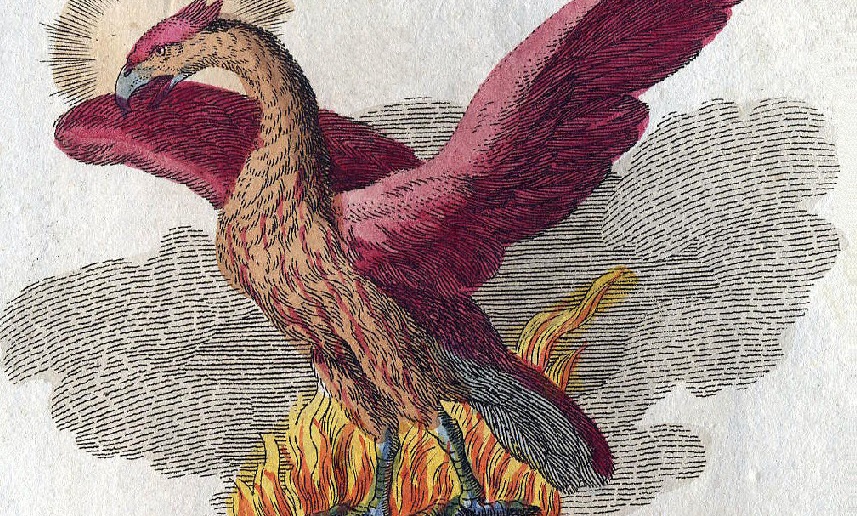
A phoenix depicted in a book of legendary creatures by FJ Bertuch (1747–1822) Via Wikipedia
The Covid-19, not only has brought us a bitter, tragic and destructive harvest, but it as been a catalyst for a much needed change and transformation: We have discovered the power of Cooperation, Collaboration and the Common Good to save our lives and then, hopefully, this will inspire us to build a better world:

- Details
- Written by: Kamran Mofid
- Hits: 2096
Coalitions, collaborations and the common good are driving COVID-19 tests, treatments, and vaccines, not competition,
nationalism, exceptionalism, ‘taking back control’, ‘building walls’ and other small-minded mentalities
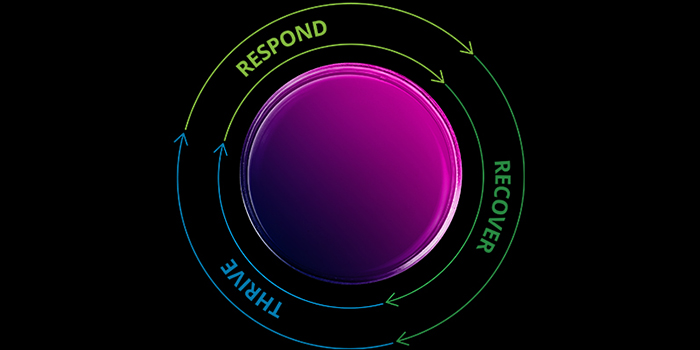
Photo: The Deloitte Centre for Health Solutions
COVID-19 Vaccines:A Global Common Good, Gifted to Us By the Values of the Common Good
For generations and generations to come after us, it must never ever be forgotten that we owe a debt of gratitude to those who cooperated, collaborated and pulled together in the interest of the common good and developed the COVID Vaccine to save the world.
And this is a moment of joy and celebration for me: The World is Saved by Cooperation and the Common Good, Not by Thatcherism, Trumpism, Brexiteerism, Neoliberalism, Selfishness, cruel, inhumane Competition and Exceptionalism, that have done no good, except giving us the Age of Perpetual Crisis
And thus, this is why I firmly believe that: Why Love, Trust, Respect and Gratitude Trumps Economics
Celebrating Our Future: Simple But Powerful Message
‘How did scientists tackle Covid so quickly? Because they pulled together’-
Dr Charlotte Summers, lecturer in intensive care medicine at the University of Cambridge
…’I began 2020 anxious about the reports emerging from Wuhan: they seemed to imply an asymptomatic transmission of a respiratory pathogen that was serious enough to put sufferers into intensive care units. I am a clinical academic with specialist training in respiratory and intensive care medicine; I also lead a research programme that focuses on the lung inflammation caused respiratory infections – to me, and others, what was being reported looked like serious trouble…
‘By early February, it was clear there was a serious problem, and the ICU where I work began preparing for what might come our way. We held our first multidisciplinary meeting to discuss how we would manage the emerging threat, with colleagues from public health, virology, microbiology and others all joining us on 12 February. At this point there had been 10 reported cases of Sars-CoV-2 in the UK…
‘In the autumn, data emerged suggesting that what many thought would be near-impossible had actually been achieved – multiple effective vaccines against Sars-CoV-2 had been developed in under 12 months. December 2020 has seen the beginning of what will be a massive UK vaccination programme starting with 50 NHS hospitals…
‘Most of the “wins” this year have come from preparedness and collaboration. One example of this is the amazing contribution of the National Institute for Health Research (NIHR) to the UK’s pandemic response. It has allowed us to rapidly learn about Covid-19 by supporting recruitment to observational studies such as Isaric-4C (the WHO Covid-19 study described above), React (a Covid-19 home-testing study), and GenoMICC (a global initiative to understand critical illness), and has offered many thousands of people the opportunity to participate in clinical trials of therapies and vaccines. This work has helped to change clinical practice across the world by delivering important research.
As we head towards 2021, I once again find myself anxious about what the new year might hold. However, I am convinced that preparedness, flexibility and a commitment to collaboration are what is needed to weather the storms that we may face in the coming months and years.’- Dr Charlotte Summers, ‘How did scientists tackle Covid so quickly? Because they pulled together.’
See also:
Public statement for collaboration on COVID-19 vaccine development
Coalitions and collaborations are driving COVID-19 tests, treatments, and vaccines
International collaboration for global accessibility of COVID-19 vaccines
2021 will see ‘vaccine cooperation, not competition,’ Russian official says after AstraZeneca tie-up
Why vaccine ‘nationalism’ could slow coronavirus fight
COVID-19 Vaccines A Global Common Good
‘The natural instinct of human beings is towards cooperation and sharing. However, distorted by competition, personal ambition and nationalism, self-interest and greed have become pre-eminent motivating forces, distorting action and corrupting the policies of governments.
Competition is a pervasive element within all aspects of contemporary society, it is thought by many to be a positive and natural part of the human condition, and one that drives innovation and change. Loyal believers in competition assert that in the world of business it serves the consumer by driving down prices and creating virtually unlimited material choice, and will, some claim, be the driving force for environmental salvation. To be blessed with a competitive spirit, it is argued, strengthens an individual’s ability to succeed and overcome rivals; it stimulates “development” and advances in all areas — after all, if the urge to compete and achieve were negated, then what would motivate action?...
‘Cooperation is a fundamental quality of the time; it sits within a trinity of the age alongside unity and sharing. The expression of each of these galvanising principles strengthens and expands the manifestation of the other two; cooperation naturally evokes acts of sharing, which builds unity. Likewise, when we unite, cooperation and sharing occur. The introduction of these essential principles of change into all areas of contemporary life will lay a foundation of social harmony and allow the socio-economic structures to be re-imagined to meet the needs of all.’
Text and Photo: The need for cooperation and unity
And
......
Embracing 21st century mindset: Collaboration, Cooperation and the Common Good

Birds flying in a V formation in collaboration to support each other’s flight. Photo: Pinterest
And Now a Reflection on Ten Collaborative Steps for the Common Good to Build a Better World
- Details
- Written by: Kamran Mofid
- Hits: 2048
BREXIT Broke My Heart: The Moment that the Milk of Human Kindness Went Sour and Lumpy
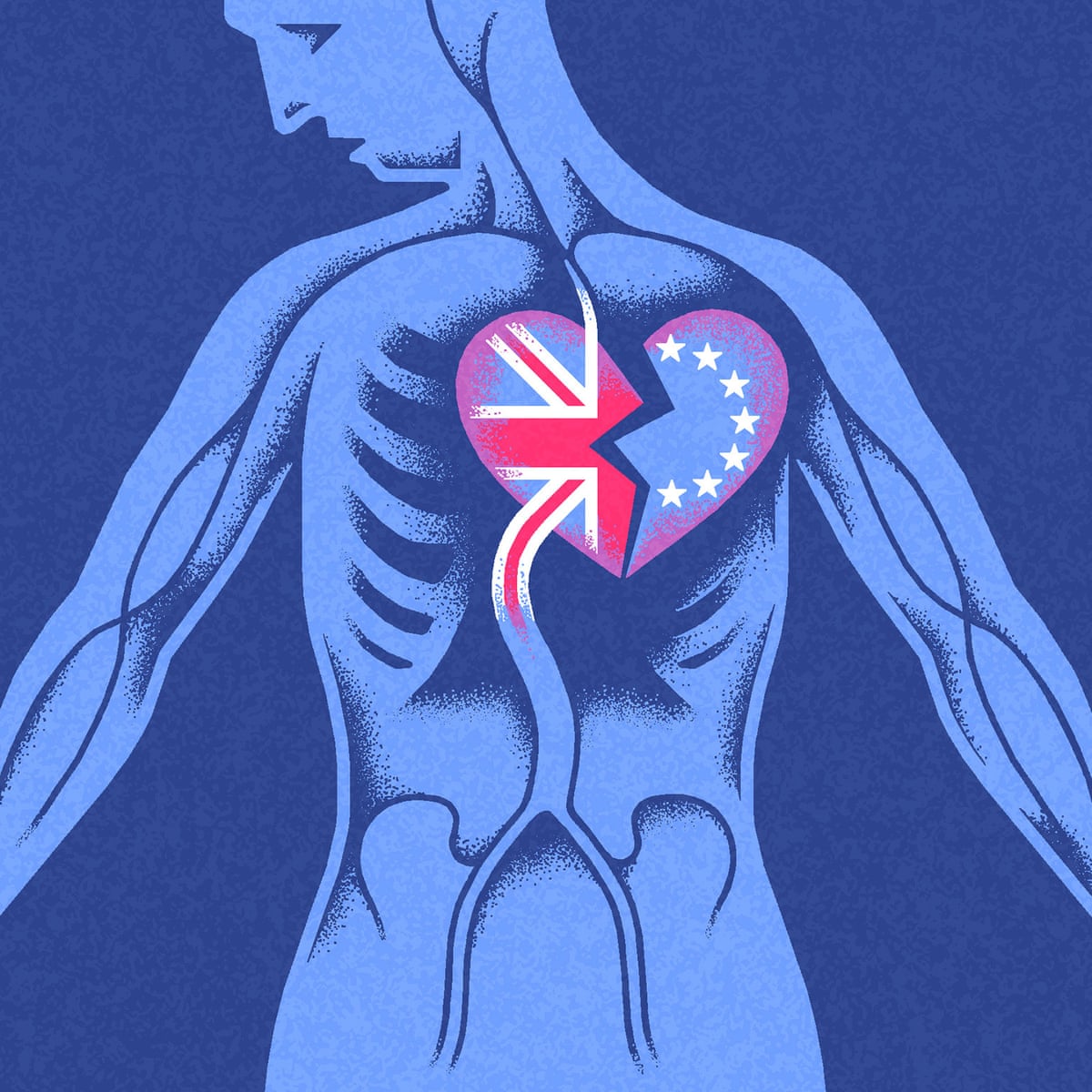
Illustration: Matt Kenyon via The Guardian
I am from Coventry, The City of Peace, Forgiveness and Reconciliation.
Thus, how can I not be at a loss with and flabbergasted by Brexit?
'Healing the wounds of history, learning to live with difference and celebrate diversity,
and building a culture of peace and justice in the interest of the common good'
This is the Europe that Coventry Story encourages us to believe in
Eurosceptics should visit Coventry Cathedral: The EU's Higher Purpose
And
EU has always been a Peace Project First and Foremost
Having failed to encourage my fellow-citizens to vote to remain in the European Union in the referendum which had been my resolution for 2016, 2017, 2018 2019 and 2020, what could be easier than succeeding in making my country a better place?
EU Referendum: An Open Letter to British people - One man's view of Britain and the British
BREXIT: When England Betrayed Churchill
So, They Got Their Brexit Done!
Throughout history Britain’s ruling class has created crisis after crisis – just like now
Watch and hear George Monbiot explaining the historical falsehood and lies behind the Brexit Project
And thus, the Time is Now for my ‘64,000 QUESTION’: How Can We Leave This Gigantic Failure Behind and Restart a Better Future?
The Bedrock of our Hope in 2021 and beyond must be Values-led Education and Learning from our Wisest Teacher, Mother Nature
I need to do something after my defeat over Brexit. Thus, I am unleashing my inner edu/ and ecowarriors, so that tragic events such as Brexit are less likely in future.
BREXIT: The Day Common Sense Died In England
Brexit: ‘An English tragedy, a self-inflicted wound, English, not British.’
...there is “absolutely nothing good about Brexit … which would never have happened had Conservative politicians not,
to a quite unprecedented degree, deceived and lied to their people”.
Britain 'taken over by gamblers, liars, clowns and their cheerleaders'
‘The charge sheet is this. The government is led by a clique of toffs who have neither respect for their colleagues, nor empathy with the average voter. Their born-to-rule mentality means they have a greatly over-inflated view of their own capabilities, which deafens their ears to the advice and warnings of others who might actually know better. They are nothing like as good at governing as they think they are. And this, the charge sheet concludes, is now inflicting serious harm on both the country and the Conservatives' future electoral prospects...’- Andrew Rawnsley
Our Narcissistic and Egoistic Elites Undermining the Common Good
There are, for sure, many reasons such as the inhumane neoliberalism/austerity, abject poverty and inequality, to name but a few, for the recent rises in populism, Brexit, and other undesirable similar things. But, for me, two reasons stand up above others:
1- The failure of education to be led by good, ethical, moral and spiritual values, and thus, it’s inability to be a path to wisdom.
2- Our failure to be connected with mother nature, to protect her and in turn be nourished and inspired by her.
To my mind, these two failures have given us a life devoid of any imagination, beauty and wisdom to see life’s bigger picture.
These tragic failures are very costly and have major destructive consequences, where one easily becomes brainwashed, separated from one's reality and humanity, and in turn becomes self- centered, selfish, individualistic, arrogant, discarding of others, disliking cooperation and belonging to a wider community, believing in one’s self-importance and exceptionalism and thus choosing isolationism, burning bridges and building walls and barriers.
In such a life, one becomes easy prey, a gullible individual to be exploited by the alchemist buffoons, dancing to their tunes and becoming totally subservient to their whims, cheats, lies and unrealistic promises.
Given the above, the fundamental and pertinent questions must surely be: How is it that the gullible masses, time and again, vote against their own self enlightened interest, and thus how can they be saved from their own self-destruction?
The answer is very easy to grasp if one is wise enough to know where to find it!
The First Step is to Find the Light, so that We Can Get Out of Darkness and Hopelessness of our own making.
That Light is EDUCATION, but not any EDUCATION and for sure not the current ‘thingy’ masquerading as Education.
The Second Step is to rediscover the Healing and Spiritual Powers of Nature and then allowing Mother Nature to become our trusted Friend and Teacher.
I will be devoting most of my time writing about these in 2021 and beyond. For now, I very much wish to share a few postings from our GCGI archive as examples of what I have in mind:
Britain today and the Bankruptcy of Ideas, Vision, Spirit and Values-less Education
At a time of profound crises there must be an opportunity for new vision, new understanding and new thinking. There is a desperate need for new practical ways of relating in an increasingly interdependent global community: a time to re-introduce spirituality, ethics, civility, kindness, humanity and the common good into the debate on globalisation, economics, politics, business, education, international relations and much more.
Surely the time is now to rise and challenge the falsehood and the inhumanity of the ideology that since the early 1980s has cheated and humiliated us by monetising all aspects of our lives, and has stopped us from knowing what it means to be human:
But, the Challenge Is: How to Make Our Country a Better Place?
Replace the delusional and destructive neoliberal education with inspirational values-led Education
The Value of Values: Values-led Education to Make the World Great Again
Brexit, Trump and the failure of our universities to pursue wisdom
To All Striking Academic Colleagues in Britain: Turn the Strike to a Force for the Common Good
The Journey to Sophia: Education for Wisdom
What if Universities Taught KINDNESS?
Wisdom and the Well-Rounded Life: What Is a University?
Throw away the fake neoliberal ‘teachers’ and let nature to be our wisest Teacher
On the 250th Birthday of William Wordsworth Let Nature be our Wisest Teacher
Why should we all become mother nature and sacred earth guardians
To Heal the World and People We Need to Save the Commons from Plunder
And finally, I hope you will consider joining me, so that together we can explore how we may make our country good and better.
Let us Come Together and Become the Voices of Hope
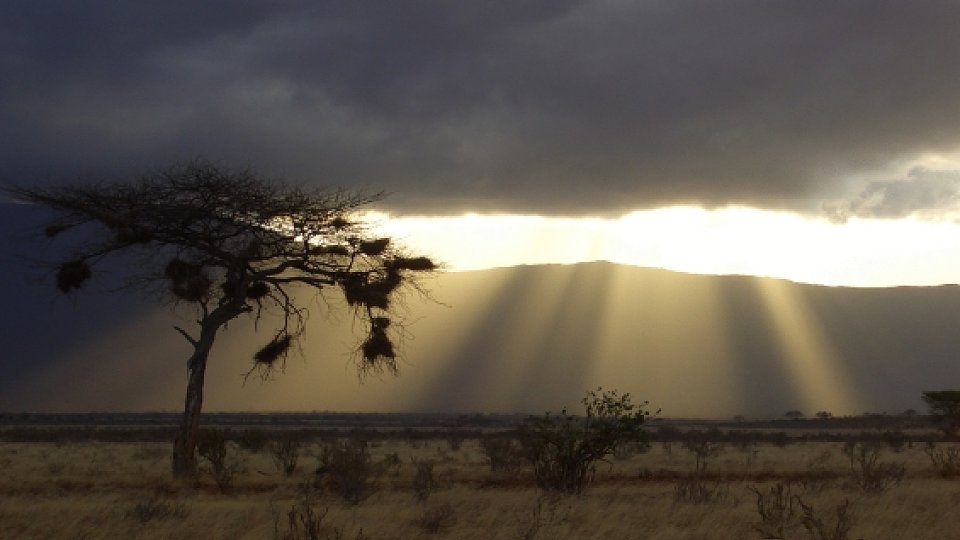
Photo:twr.org
The Days to Come
‘Now shall I store my soul with silent beauty,
Beauty of drifting clouds and mountain heights,
Beauty of sun-splashed hills and shadowed forests,
Beauty of dawn and dusk and star-swept nights.
Now shall I fill my heart with quiet music,
Song of the wind across the pine-clad hill,
Song of the rain and, fairer than all music,
Call of the thrush when twilight woods are still.
So shall the days to come be filled with beauty,
Bright with the promise caught from eastern skies;
So shall I see the stars when night is darkest,
Still hear the thrush’s song when music dies.’
~ Medora C. Addison, “The Days to Come,”
in Dreams and A Sword (Yale University Press, 1922).