- Details
- Written by: Kamran Mofid
- Hits: 1260
The Western World and Japan.
Understanding Other Countries: The Heart and Soul of Japan
H. E. Hiroaki Fujii, St Mary's Guildhall, Coventry, 1995
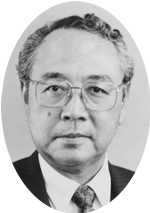
H. E. Hiroaki Fujii
Nota bene
On the day that we remember the 75th anniversary of the nuclear bombing of Hiroshima And Nagasaki, I would also very much like to remember Japan’s Ambassador’s visit to Coventry, 25 Years On.
Forgiveness and Reconciliation: The Keystones of Human Values
"We cannot change the past, but we can change our attitude toward it. Uproot guilt and plant forgiveness. Tear out arrogance and seed humility. Exchange love for hate --- thereby, making the present comfortable and the future promising."- Maya Angelou
Ambassadors’ Lecture Series: A bird’s eye view
In 1986 I was awarded my PhD in Economics at University of Birmingham and soon after I was appointed full-time senior lecturer at the Department of Economics at Coventry Polytechnic (now University).
At an international conference in London in 1986 I met the then director of the Anglo-Japanese Economic Institute, Mr. George Bull. We became very good friends. Indeed, George was like a father figure to me- a source of wisdom and inspiration. He introduced me to Japan and to many Japanese friends and facilitated some of my trips to Japan. We did many national and international conferences together, including: Japan and the U.K. Economy; Forgiveness and Reconciliation; NAFTA and the EU; Japan and the Global Economy; and Iran and the Emerging Global Order, all held at Coventry University.
We also together - in association with and supported of the University, the Cathedral and the City Council - instigated and co-founded the Centre for the Study of Forgiveness and Reconciliation at Coventry University and as part of its work, in association with the Ambassadors’ Lecture Series, which we had co- founded already, invited international speakers including the former presidents of Ireland and South Africa, namely, Mrs. Mary Robinson, and F.W. de Klerk to deliver lectures at Coventry Cathedral. Moreover, we also invited other international speakers including Ambassadors of Japan, Germany, Italy, Egypt, Mexico and the High Commissioner of Canada to deliver lectures on the need for dialogue and mutual respect amongst different cultures and civilisations at Coventry’s St. Mary’s Guildhall.
The Ambassadors’ Lecture Series aimed at enabling the ambassadors a frank exposition of their respective countries’ policies to a far wider audience in search of better understanding of why particular nations and peoples have acted in certain ways and what changes are desirable and feasible in different nations’ aims and attitudes.
The anniversary of the end of the Second World War, the Pacific War, made the decision of the Ambassador of Japan to accept our invitation to give the very first Ambassador’s Lecture especially significant and timely.
The Western World and Japan by His Excellency Hiroaki Fujii, Coventry, 1995
‘Father Forgive’: Coventry Cathedral and my life's journey of discovery
- Details
- Written by: Kamran Mofid
- Hits: 2633
Hibakujumoku: Hiroshima's trees of hope
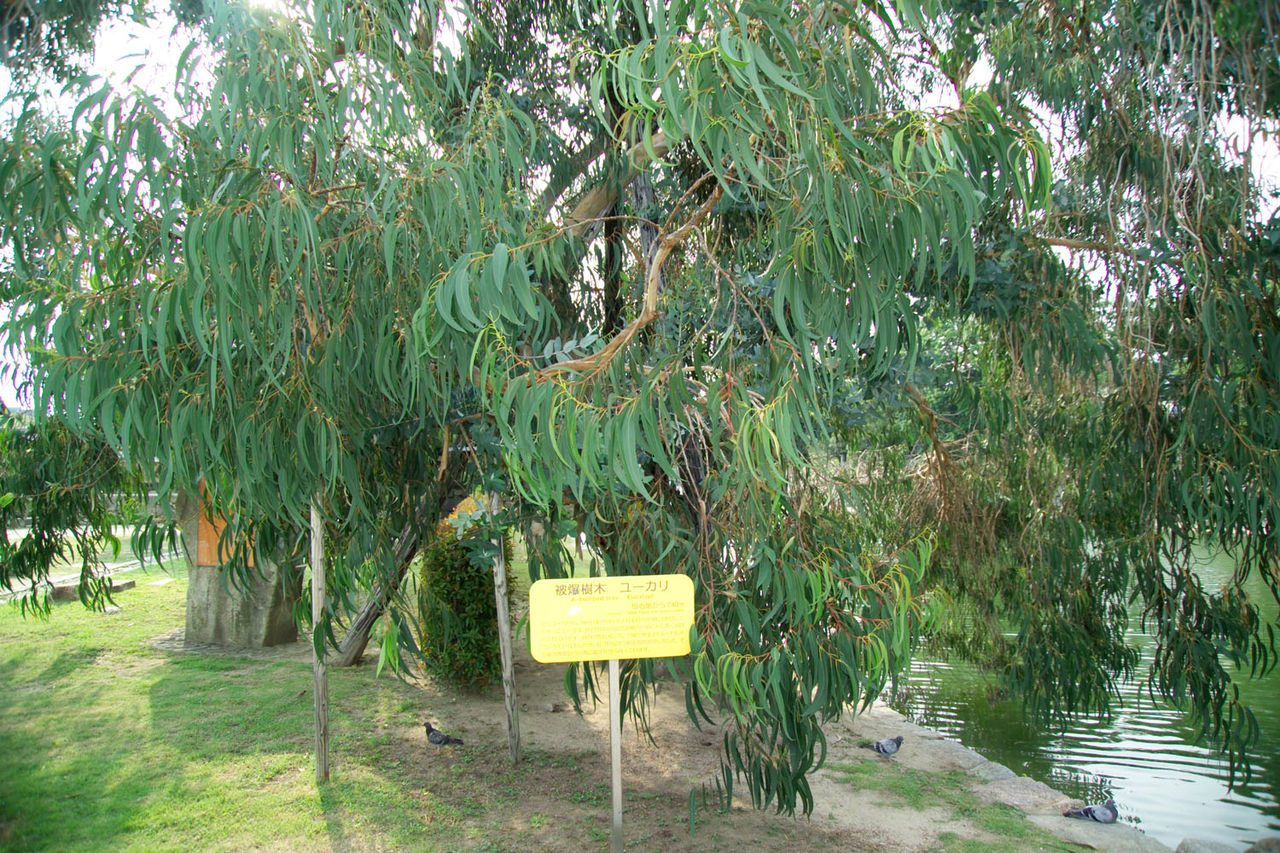
One of the trees which survived the atomic bomb
‘Eucalypt at the site of Hiroshima Castle, 740 m from hypocenter. The tree survived the atomic bombing, while the castle was destroyed.’-
Caption and Photo:Wikipedia
75 years ago the US dropped an atomic bomb, nicknamed Little Boy, on Hiroshima, killing 140,000 of its 350,000 citizens. Three days later, a second bomb, Fat Man, was dropped on Nagasaki, killing 74,000 people.
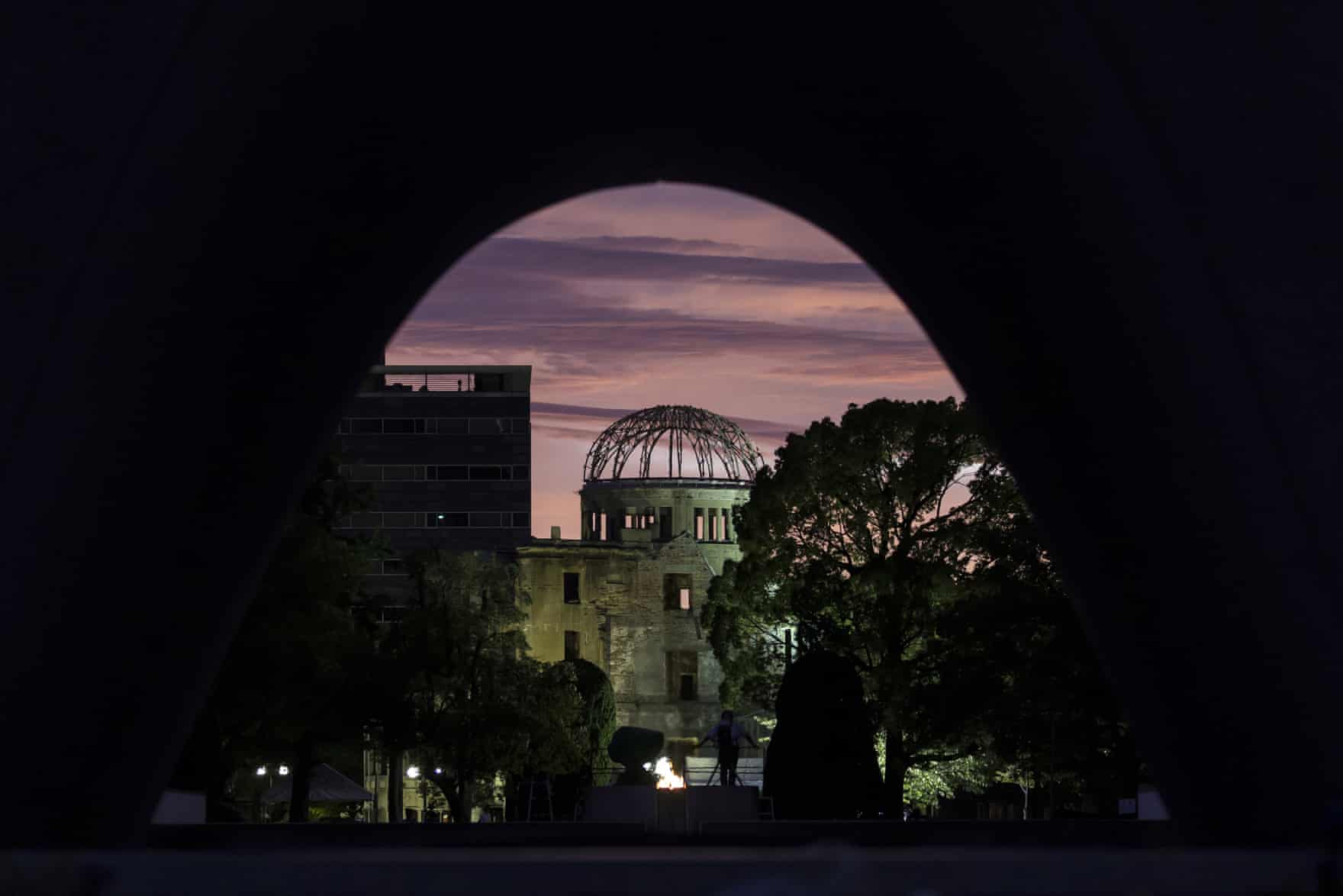
Sunrise at the Atomic Bomb Dome in Hiroshima Peace Memorial Park, 6 August 2019. Photo: The Guardian
The trees that survived the bombing of Hiroshima

Photo:Green Legacy Hiroshima
How a message of hope and peace is being spread by trees that everybody believed were dead, but survived and became beacons of hope.
After the atomic bombing of Hiroshima on 6th August 1945 it was thought that nothing would grow in the city for 75 years. However, the following spring new seedlings were seen springing up amongst the debris of the city. They provided a powerful message to the survivors and gave them hope that they could rebuild their city.
Today Hiroshima is a green and vibrant city. Many of the trees that were planted in the city after the war were gifts from overseas donors and donors from other parts of Japan.
Hibakujumoku
However, 170 of the trees that we can enjoy in the city today had actually been in Hiroshima before the bomb was dropped and survived the bombing and the devastation that followed. After the war, many of those trees were replanted or preserved in 55 locations within a 2km radius of the hypocenter. Today, they are officially registered as A-bombed trees. Each A-bombed tree is called a hibakujumoku and is identified by a name plate.-ANT- Hiroshima News
Green Legacy Hiroshima (GLH) Initiative
The GLH Initiative is a global volunteer campaign, aiming to disseminate the universal message of trees that survived the atomic bombing of Hiroshima. Created in 2011 by two friends, Nassrine Azimi and Tomoko Watanabe, GLH shares worldwide the double message of caution and hope that the unique survivor trees of Hiroshima (and ultimately Nagasaki) represent, recalling on the one hand the dangers of arms of mass destruction and nuclear weapons in particular, and on the other hand the sacred character of mankind and the resilience of nature. Currently seeds and saplings from the A-bombed trees are growing in more than 30 countries - in a sustained, long-term (1000-year) campaign, joining other efforts for a nuclear-free and more ecological planet.
Learn more about GLH Initiative
Introduction video Green Legacy Hiroshima
The trees that survived the bombing of Hiroshima: A Video on the Trees of Hope in Hiroshima
Read more about Trees, Mother Nature and Hope

Photo: pinterest
Celebrating the tree of life that has shaped human history and civilisation
The Inspiring Story of a Giant Sequoia (Mammoth Tree) of California
The future that awaits the human venture: A Story from a Wise and Loving Teacher
World in Chaos: The Healing Power of Gardens
The healing power of ‘Dawn’ at this time of coronavirus crisis
On the 250th Birthday of William Wordsworth Let Nature be our Wisest Teacher
A Sure Path to build a Better World: How nature helps us feel good and do good
Happy International Day of Forests 21 March 2018
Neoliberalism and the death of Nature in Sheffield and the world over
In Search of Well-being, Joy and Happiness: ‘Nature and ‘Forest Bathing’ is the Path
- Details
- Written by: Kamran Mofid
- Hits: 1379
In this beautiful life, there is always beauty for those who want to see it
“God gave us the gift of life; it is up to us to give ourselves the gift of living well.” — Voltaire
“How much of human life is lost in waiting!” — Ralph Waldo Emerson

Photo:Well/Awake
‘Dance like no one’s is watching’
'HAPPINESS'
Fr. Alfred D'Souza
"For a long time it had seemed to me that life was about to begin - real life. But there was always some obstacle in the way, something to be gotten through first, some unfinished business, time still to be served, or a debt to be paid. Then life would begin. At last it dawned on me that these obstacles were my life."
This perspective has helped me to see that there is no way to happiness. Happiness is the way.
So, treasure every moment that you have and treasure it more because you shared it with someone special, special enough to spend your time...and remember that time waits for no one.
So, stop waiting until you lose ten pounds, until you gain ten pounds, until you have kids, until your kids leave the house, until you start work, until you retire, until you get married, until you get divorced, until Friday night, until Sunday morning, until you get a new car or home, until your car or home is paid off, until spring, until summer, until winter, until your song comes on, until you've had a drink.... there is no better time than right now to be happy.
Happiness is a journey, not a destination.
Work like you don't need money,
Love like you've never been hurt,
And dance like no one's watching.”
More on What is Happiness? What is the Good Life?
And, yes, it is true, ‘Dance like no one’s watching’...And Be Happy!
I have experienced it myself, Todi-Week, Tuscany, Italy, 2019:
Watch the Video Celebrating the Joy of Beauty, Happiness and Friendship

Photo:RemedyGrove
The secret to happiness? Contentment!
In these troubled times let us be ordinary and enjoy the simple pleasures of life
The beauty of living simply: the forgotten wisdom of William Morris
The Pandemic and the forgotten Love Story
Dance with Mother Nature...And Be Happy
Why Happiness Should be Taught at Our Universities
Happiness and the Good Life
A must- read book
By Mike W. Martin
Published to Oxford Scholarship Online: May 2012
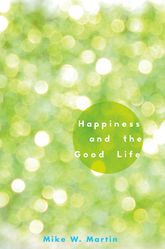
Photo: Oxford Scholarship Online
'Happiness in Good Lives explores happiness as an important dimension of fully desirable lives. Happiness is defined as loving one’s life, valuing it in ways manifested by ample enjoyment and a robust sense of meaning. As such, it interacts with all other dimensions of good lives, in particular with moral decency and goodness, authenticity, mental health, self-fulfillment, and meaningfulness. The book integrates philosophical issues with topics of broad human interest, and it includes chapters on how happiness connects with the virtues, love, philanthropy, suffering, simplicity, balancing work and leisure, and politics. Happiness is a moral value, as well as a self-interested value, which we have a responsibility as well as a right to pursue. Myriad specific virtues contribute to pursuing happiness, and in turn happiness contributes to or manifests an array of virtues such as love, self-respect, gratitude, and hope. Although happiness is by no means the entirety of good lives, it helps define some additional aspects of good lives, including authenticity, self-fulfillment, meaningfulness, and mental health. It also enters into understanding what it means to live a balanced life, and also a simple life centered on what matters most. The moral status of happiness is a central concern in the history of ethics. Recent “positive psychology” has breathed new life into traditional philosophical issues, and the book draws extensively on psychological studies. It also uses myriad examples from memoirs, novels, and films. One chapter is devoted to assessing the claim of Mary Shelley’s monster in Frankenstein: “Make me happy, and I shall again be virtuous.”
CONTENTS:
1 Loving Life
2 Valuing Happiness
3 Betting on Virtue
4 Authenticity
5 Happily Self-Deceived
6 Suffering In Happy Lives
7 Paradoxes of Happiness
8 Happy To Help
9 Shared Pursuits In Love
10 Balancing Work and Leisure
11 Simplicity
12 Felicity In Frankenstein
13 Personal and Political
- World in Chaos and Despair: The Healing Power of Friendship
- A timeless reflection on two types of teaching and learning
- Thank you UN secretary general for hearing the cries of the youth to build a better and more sustainable world
- Thank you New Zealand for your humanity welcoming Behrouz who had no friends but the mountains
- Dear Mr. Trump This is How to Make America Great Again