- Details
- Written by: Kamran Mofid
- Hits: 1607
The Cost and Consequences of the Economics of the Whites for the Whites by the Whites
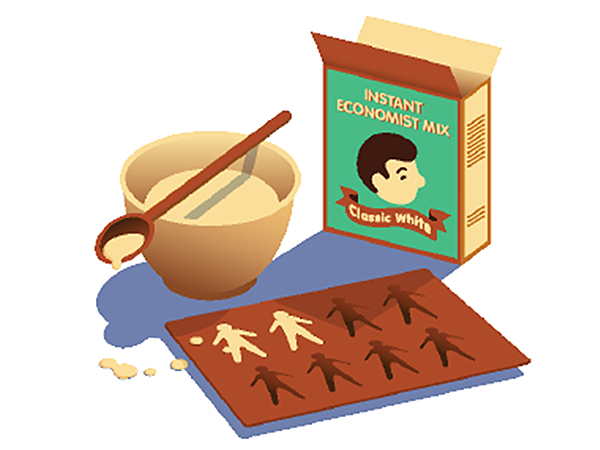
Photo:ft.com
...And this, the charge sheet concludes, is now inflicting serious harm on the whole fabric of our society and community, with tragic consequences for us all:
‘This lack of diversity at the very highest echelons of economic policymaking reflects a similar lack of diversity across the economics profession as a whole. It’s one that leads to a lack of attention to issues that specifically affect minorities in everything from economic research to the macroeconomic models used to understand the world to public policy decisions. But it also deprives economics, in general, of its best chance to serve the public most effectively. A narrow pipeline of economists has created a profession vulnerable to groupthink. Lacking the widest possible range of perspectives, life experiences, and expertise, the profession stands to miss crucial information, and make poor decisions. This is a charge that was laid on the Federal Reserve after the 2008 financial crisis.’
The dismal cost of economics’ lack of racial diversity
By Eshe Nelson, Via QUARTZ
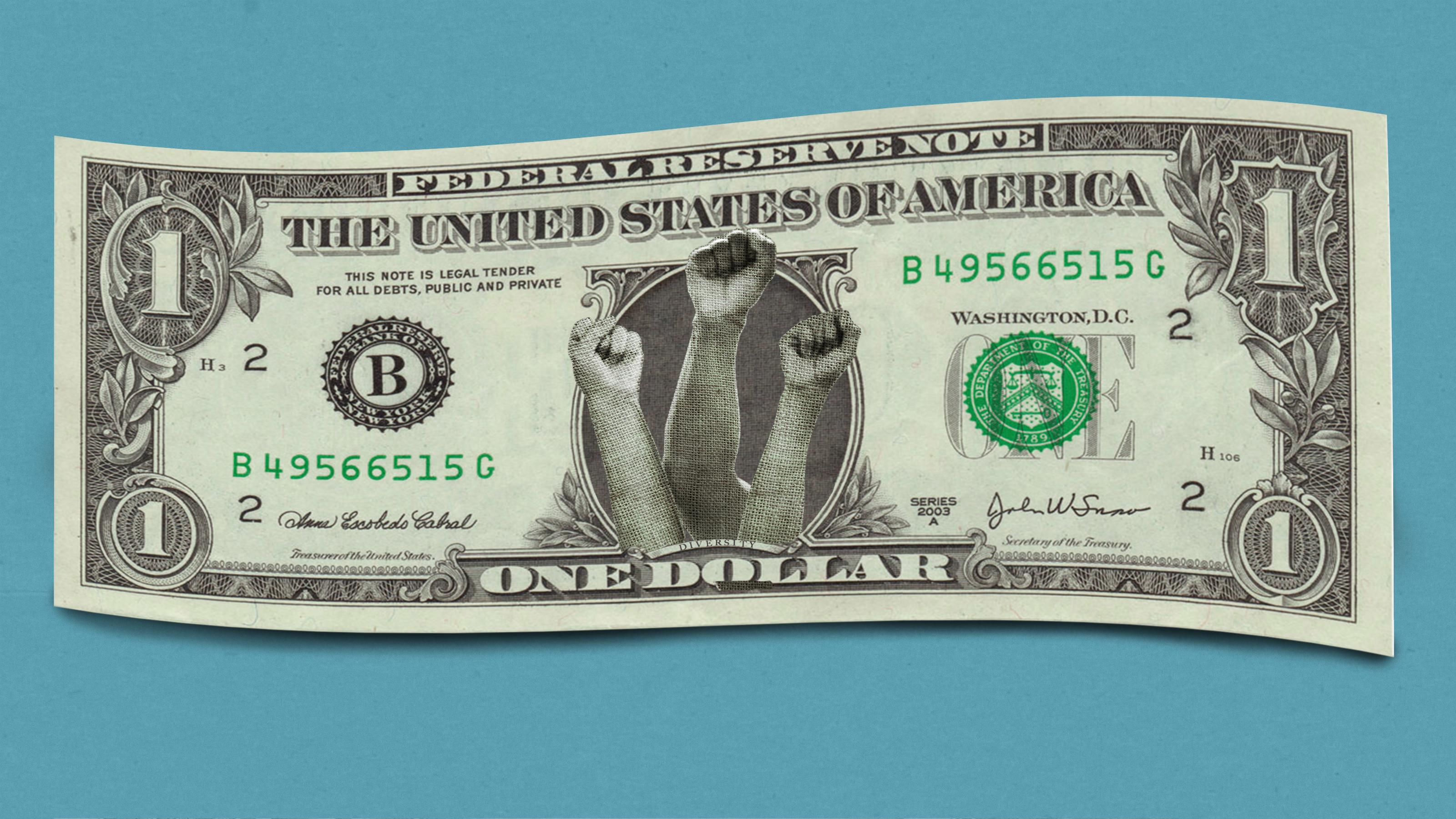
Photo:qz.com
‘On June 5, 2017, Raphael Bostic became the 15th president of the Federal Reserve Bank of Atlanta. This also made him the first African American president of any regional Fed in the US central bank’s 100-year history.
The Atlanta Fed is the main seat of the Federal Reserve’s sixth district, which covers all of Alabama, Florida, and Georgia, as well as parts of Tennessee, Louisiana, and Mississippi. Bostic’s role is to study trends in the economy, and oversee monetary policy activities and bank regulation in the region. This year he also became a voting member of the Fed’s main interest rate-setting body in Washington DC, the Federal Open Market Committee (FOMC)
The symbolism is stark. The states of the sixth district were at the heart of the country’s civil rights movement, culminating a little over half a century ago, in the Civil Rights Act affording black Americans the same rights as their white peers.
Progress since has been achingly slow. The gulf between the economic lives of black and white Americans is still staggeringly wide. For example, average household wealth for a black family is about $17,000, one-tenth of white household wealth. In some respects, racial inequality has gotten worse.
Bostic isn’t the first black person to be a member of the powerful FOMC, which sets US interest rates thereby influencing everything from government borrowing costs to mortgages rates. The first was Andrew Brimmer, a sharecropper’s son from Louisiana, who was educated in racially segregated schools. In 1966, Brimmer was appointed by president Lyndon Johnson to an eight-year term on the Fed’s board of governors.
In the intervening 43 years, just two other black people have served on the FOMC, both men—Emmett J. Rice and Roger W. Ferguson Jr. Two other men of color, Narayana Kocherlakota and Neel Kashkari, both of Indian descent, have served as heads of the Minneapolis Fed. That makes six non-whites out of a total of 235 people who have served on the Fed’s Board of Governors or been president of a regional Fed since it first met in 1914. It’s worth adding that just 16 women have ever been on the rate-setting committee, which is made up of the members of the board and a rotating schedule of regional Fed presidents.
This lack of diversity at the very highest echelons of economic policymaking reflects a similar lack of diversity across the economics profession as a whole. It’s one that leads to a lack of attention to issues that specifically affect minorities in everything from economic research to the macroeconomic models used to understand the world to public policy decisions. But it also deprives economics, in general, of its best chance to serve the public most effectively. A narrow pipeline of economists has created a profession vulnerable to groupthink. Lacking the widest possible range of perspectives, life experiences, and expertise, the profession stands to miss crucial information, and make poor decisions. This is a charge that was laid on the Federal Reserve after the 2008 financial crisis…’ Continue to read
Related articles:
Bastard Economics of Greedy Neoliberalism
People’s Tragedy: Neoliberal Legacy of Thatcher and Reagan Details
The Destruction of our World and the lies of Milton Friedman
Calling all academic economists: What are you teaching your students?
Hopefully Values-led Economics and not a load of mumbo jumbo!!
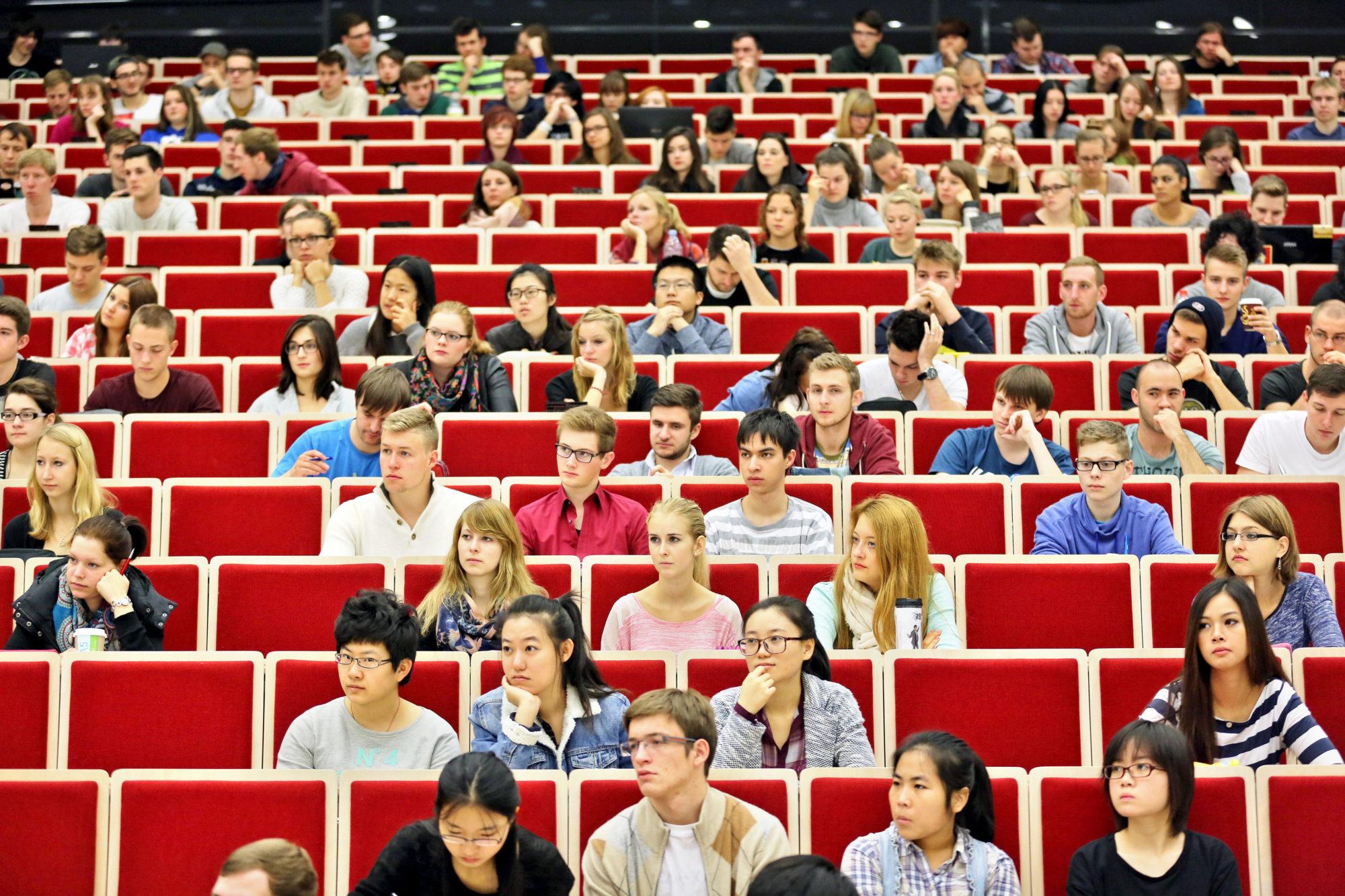
Economics students at the University of Leipzig-Photo:unherd.com
- Details
- Written by: Kamran Mofid
- Hits: 3752
...And this, the charge sheet concludes, is now inflicting serious harm on the whole fabric of our society and community, with tragic consequences for us all, and especially for our children and grandchildren.
The Big Question surely must be: Why are these people behaving like this? Who has given them the right to think that they know it all and that they are taking action on our behalf, for our well-being for our betterment?
I tried to find out, and I think I have. There you have it:
Dysfunctional & Delusional Governance: Posh Boys & Girls Ruining Britain
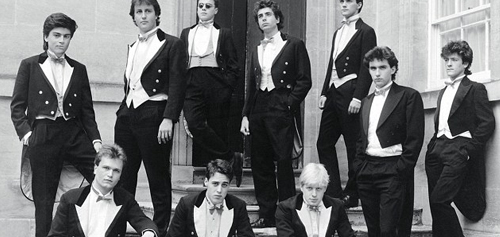
Men of the people? David Cameron, Boris Johnson and a few more Posh Boys in the livery of the Oxford University Bullingdon Club
“The charge sheet is this. The government is led by a clique of toffs who have neither respect for their colleagues, nor empathy with the average voter. Their born-to-rule mentality means they have a greatly over-inflated view of their own capabilities, which deafens their ears to the advice and warnings of others who might actually know better. They are nothing like as good at governing as they think they are. And this, the charge sheet concludes, is now inflicting serious harm on both the country and the Conservatives' future electoral prospects. This view is now becoming more and more prevalent in the media, too, even among the press that the Conservatives would normally count as their friends.”-Andrew Rawnsley, The Observer, 29 April 2012
"Private education is not fair. Those who provide it know it. Those who pay for it know it. Those who have to sacrifice in order to purchase it know it. And those who receive it know it, or should. And if their education ends without it dawning on them, then that education has been wasted.”-Allen Bennett: ‘Private Education is unfair and un-Christian’
Watch How the Posh Boys and the Posh Girl are Ruining Britain
Photo: media.boreme.com
“Brexit means Brexit and we are going to make a TITANIC success of it”
‘What did I learn at private school? They should be abolished’
By Angus Satow, via The Guardian*
‘Private schools like my alma mater St Paul’s entrench inequality. Abolishing them would be a progressive step’
‘The educational dominance of private schools is once again in the news, following new research which shows that eight top UK schools, including my own secondary school St Paul’s, get as many pupils into Oxbridge as three-quarters of all schools and colleges together.
Cue yet another round of soul-searching about how to close the gap. Last year, the Sutton Trust proposed an “Open Access” scheme with subsidised places for low or medium income students. Others go on the offensive: the 2017 Labour manifesto declared the party would remove private schools’ VAT exemptions to fund free school meals for primary school children.
But haven’t we heard this all before? The cycle of outrage is endless, discussions about reform are constant – yet nothing changes. The entrenchment of privilege through education is as deep now as it ever was – we don’t need to recite the well-known figures about the domination of top professions by the privately educated to know that. It’s time to make the case for abolition.
There’s a reason outrage at these stories is so widespread: the injustice is blatant. You’re rich, you put your child in a private school, they have smaller class sizes, more resources and, hey presto, they get better results, better university places and better-paying jobs. Among the pupils themselves, intelligence is depicted as innate. Since an A grade was seen as the minimum requirement at St Paul’s, many come to believe this nonsense.
Rather, there are simply more provisions. To take one example, in my sixth-form years I attended weekly Oxbridge preparation classes; a semi-professional mock interview; and talks from “Old Boys” telling us how to game the Oxbridge application process. No wonder a quarter of pupils gained an Oxbridge place in 2016.
Ironically-named public schools like St Paul’s are the breeding ground of Britain’s ruling classes. During my time there I heard talks from leading politicians and influencers: MPs, cabinet ministers, think tank directors, even Prince Charles. Most of these speakers were brought in through personal connections among Britain’s incestuous elite. Even now, I regularly receive invites to ex-pupil drinks events where the rich and powerful make connections.
This bubble of governing power exists apart from society. We played sport against other schools, but only private and grammar ones. We socialised with other schools, but rarely with academies or comprehensives or sixth-form colleges. The characterisation of Britain’s education system as one of “social apartheid” couldn’t be more apt.
The upshot is an obscene culture of entitlement. On my first day at the school we were told that we were important because we would end up leading society, as executives, politicians, bankers. We were destined, in short, to rule.
Occasionally the implicit contempt for “the masses” would surface: one Friday afternoon, a particularly loathsome classmate openly expressed his disdain for state-educated people. I heard the word “plebs” on more than one occasion.
None of this is solved by a wider range of access to these schools, or by making tweaks to their taxation. The fundamentally oppressive structure of a two-tier schooling system is left undisturbed. Those who claim these schools’ bursary programmes create some sort of meritocracy would do well to consider that of over half a million pupils at independent schools, only 6,000 are on full bursaries.
Next comes the defence that these schools help the community. Leaving aside that community schemes are a prerequisite for their charitable status, it’s also untrue. St Paul’s “philanthropic” sharing of its swimming pool with local state schools is a drop in the ocean when you consider the school was the ideological training ground of austerity’s chief architect, George Osborne, whose policies cut schools funding, massively increased homelessness, and led to 120,000 excess deaths.
There is no tenable defence of private schools. So why is Labour’s response limited to a tax reform? The party’s success at the 2017 election was in large part down to its promised reinvigoration of public services and investment in communities. The National Education Service it proposed – cradle-to-grave learning free at the point of use – made waves. Universal provision and democratic accountability were on the table.
Private schools offer neither. Instead they serve to create an entitled elite cut off from a society they are told they deserve to rule. For as long as they exist, the supremacy of inherited wealth will reign in Britain.
Integration doesn’t mean a few lucky souls joining the gilded circles of power. It means ending an unequal distribution of resources and educating our youth collectively. Private schools’ playing fields, sports halls and state-of-the-art resources should belong to the community, not just the rich. By abolishing private schools, Labour would make a lasting and meaningful stride towards social justice, and lay the foundations for a fairer future.’
*The above article by Angus Satow was first published in the Guardian on Wednesday 12 December 2018.
“pinstriped Robespierres” of the anti-EU European Research Group
Brexit 'delusions' risk putting UK into crisis, warns Ivan Rogers
Hard Brexiters have used confusion, delusion and lies to prosecute their damaging fantasies.
A Path to Values-led Education for all
Must-read book
Posh Boys: How the English Public Schools Ruin Britain
by Robert Verkaik (Oneworld Publications Ltd, London 2018)
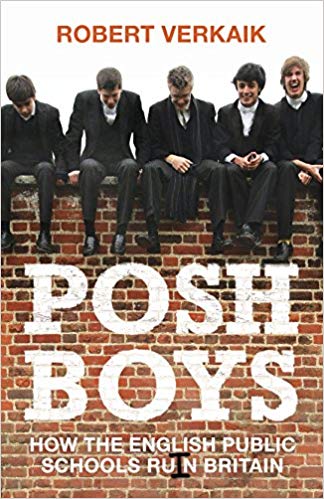
‘Imagine a world where leaders are able to pass power directly to their children. These children are plucked from their nurseries and sent to beautiful compounds far away from all the other children. They are provided with all the teachers they need, the best facilities, doctors and food. Every day they are told this is because they are the brightest and most important children in the world.
Years later they are presented with the best jobs, the grandest houses and most of the money. Through their networks of friends and family they control the government, the courts, the army, the police and the country’s finances. They claim everyone is equal, that each person has a chance to become a leader. But this isn’t true.
If such a world existed today wouldn’t we say it was unfair, even corrupt?
With Posh Boys Robert Verkaik issues a searing indictment of the public school system and outlines how, through meaningful reform, we can finally make society fairer for all.’
...And finally, My Take on Britain
I am grateful for the opportunity to live in a country that encourages me to be who I am, what I am: An Englishman of Persian origin and heritage.
EU Referendum: An Open Letter to British people - One man's view of Britain and the British
- Details
- Written by: Kamran Mofid
- Hits: 3106
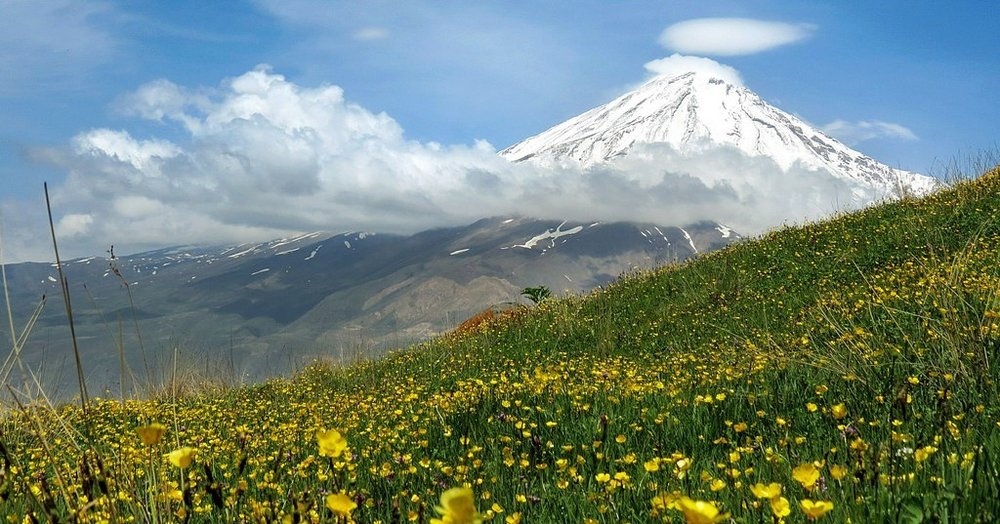
Photo:tehrantimes.com
Mount Damavand, 69 kilometers northeast of Tehran, is the highest mountain in Iran, the Middle East and the highest volcanic peak in asia. It has an elevation of 5,670 meters and its summit shows a small concave crater. It is an inactive volcanic mountain which was activated in the Quaternary Period. It has numerous thermal springs. The peak of Damavand is covered permanently with snow during the entire year. The most important thermal springs are Ask and Larijan. The flora and fauna is very rich and include about 2000 plant species. There are numerous endemic species which are important to flora of the world.
Since I remember I’ve always been in love with nature and the mountains. They’ve always been with me, even in my earliest childhood. I had the privilege to be taught that by my late father from a very early age. I recall very fondly, going to Mount Damavand and the surrounding areas, walking, hiking on the footpaths, going to the thermal springs, catching trout from the river, cooking them on log fires, enjoying wonderful times with my parents and my brothers and sister. What wonderful times we had in the company of Mother Nature.
- A Visual Journey to Heaven and Hell
- Moth and Raynor Winn: The Salt Path, Walk on the Wild Side: A Heart-touching Story of Life, Love, Hope and Resilience
- OUR SACRED EARTH Tuscany Forum: The Videos
- Racism in Britain in the post-Brexit age
- Valuing economics and economy as inspirational gardens of discovery