- Details
- Written by: Kamran Mofid
- Hits: 2787
Photo:Evonomics
Nota bene
‘This far-right philosophy is an affront to the idea that we're all in this thing together.’
Ayn Rand: The Mean Girl and the Cruel Heart of Neoliberalism
Photo:Dissent Magazine
"It has a fair claim to be the ugliest philosophy the postwar world has produced. Selfishness, it contends, is good, altruism evil, empathy and compassion are irrational and destructive. The poor deserve to die; the rich deserve unmediated power. It has already been tested, and has failed spectacularly and catastrophically.”
- Details
- Written by: Kamran Mofid
- Hits: 1918
Pause For Thought
Cultivating our Inner Lives: Search for Meaning and Truth

Photo: Aleksandr Simonov, Via Adobe Stock
Reflecting on the Past to Prepare for the Present and Future
In order to understand where we are going, we need to understand where we have come from.
Lost in Thought: The Hidden Joy and Pleasures of a Spiritual life of Meaning and Purpose

Photo: The Montana Institute
At 2am on Sunday 25 October British summer time (BST) came to an end. The clocks were put back an hour to 1am, and we went back to observing Greenwich mean time (GMT) again, until 28 March 2021, when the clocks will be put one hour forward.
So, my question is: What are we going to do with this gift of extra time?
'I’m very grateful for the extra hour we are gifted each year.'
Today (Wednesday 21 October), like any other day, I got up at Dawn, came down to the room, I call my little office, and began my day by doing the usual: Putting the kettle on, making the first cuppa of the day, reading a poem or two, and wondering what the day has in store for me.
Then, I turned the radio on, as always, the BBC Radio 2. It was the time for ‘The Pause For Thought’.
Zena Kazeme was speaking, what a joy it was listening to her. She made my day. A day full of hope, beauty and wisdom, inspired by Persian poetry, sages and philosophers of love.
Below, you can hear her speaking. I very much encourage you to do so.
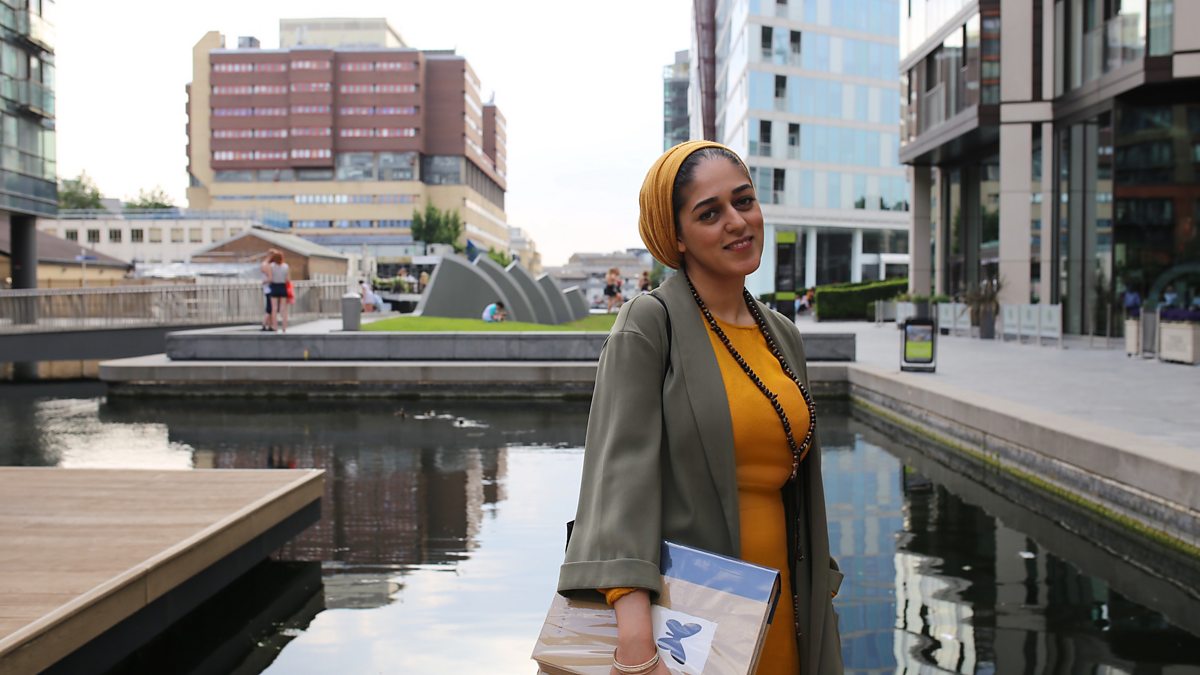
Photo: BBC
(Zena Kazeme is a Persian-Iraqi poet who draws on her experiences as a former refugee to create poetry that explores themes of exile, home, war, heritage, justice and hope.
Her first published poem was as a result of winning a school competition at the age 11. Since then, she has performed at various events, including Artists in Solidarity with Refugees at the Poetry Cafe and International Women’s Day at Imperial College, London. She is also a regular contributor to BBC Radio 2’s Pause For Thought.
She is an Immigration and Asylum Caseworker and an avid advocate for refugee rights. She holds a Masters in Law with a focus on Human Rights and Immigration in the UK. Zena is currently compiling her first collection of poetry entitled The Nostalgic Diaspora.
Pause For Thought: 'I’m very grateful for the extra hour we are gifted each year.'- LISTEN NOW
Read more from Zena:
Hope by Zena Kazeme
‘Once in a poetry workshop we were asked to meditate on the word hope and write down the senses it evoked — the sights, smells, sounds. As I meditated, a very specific sound came to mind. It took me back to my time working at the refugee camps in Greece.
I was walking through the camp late one night, exhausted and lost, using my phone flashlight to navigate. It had been a particularly difficult day; heavy rain had soaked the tents, turned the field muddy and many families faced the harsh reality of sleeping on a wet floor that night.
It was the kind of situation that bred despair and desperation. I drudged along in the mud praying my phone battery would hold up until I reached the checkpoint out of the camp. Then suddenly, in the distance, I heard the faint sound of clapping and singing. I looked up to find the only light other than my phone; a small campfire burning between two tents, and the silhouette of a couple seated next to each other on plastic chairs with a small crowd of women surrounding them, ululating like a chorus of birds above their heads and beating on makeshift drums.
As I got closer, it became clear that these were wedding drums. The young couple, I later discovered, had met and fallen in love in the camp. Tired of waiting for the borders to open, they had decided to tie the knot. They would come by to see me and my colleague from time to time and quiz us about life in Europe.
One time, they asked us about our ethnicity, and they smiled when my colleague told them she was Arab but from the UK. They looked at each other enthusiastically and said, ‘our children are going to say that one day’. I remember thinking skeptically at the time, how naïve they were. I wanted to ask them where did you find love in a place like this?
When I returned home, I shared the story with my parents, and they laughed at my scepticism. That is how I came to know that my parents were also met with cynicism when they were married under similar circumstances over 30 years ago. After being separated from each other during a mass exile in the 80s that forced hundreds of thousands of Iraqis into refugee camps on the Iran-Iraq border, my parents almost gave up trying to find each other.
Eventually after exile and separation, in the middle of war, they reunited. Their wedding was held in a friend’s small back garden on a rare night when the war sirens were silenced, and curfews were lifted. There were no venues or caterers and even the Imam that married them was reluctant to attend and so anxious to leave that he rushed through the vows. My mother later donated her simple wedding dress to the refugee camp she had lived in and over the years it was worn by countless refugee brides.
I used to think that hope can only manifest itself through divine signs, like a poppy growing in a battlefield, or a seed dreaming of spring beneath the snow or the sun rising after every dark night, but I realise that sometimes, it needs to be deliberately cultivated.
Hope is an act of resistance, the weapon of the oppressed. For a refugee, there is nothing more valuable and sacred than hope. It is your bread when you have nothing to live on, it pulls you up as you climb over concrete walls to freedom, it holds your hand and whispers prayers in your ear as you cross tumultuous oceans, as you fly across turbulent skies. It beats loudly in your chest as you burn your hands on hot metal rods under the belly of a truck.
Our mothers smuggle hope in their wombs across borders and checkpoints. Hope is both an intimate companion and an infliction we cannot part with, it keeps us restless, but it also keeps us alive. It is the only antidote to fear, it is the ultimate lifeline. It sits patiently and waits for us to be released from the last stage in the cycle of grief and then gives us a new lease of life. It shows us a future in which we are alive.’- Reprinted from Amos Trust
……
Zena in her talk spoke about the Shab-e-Yalda, which I wish to introduce you to in more details:
'The story of Yalda may be interpreted as a tale of courage and effort during darkness, a triumph of light and human warmth that ultimately causes the spring to bloom in hearts.'
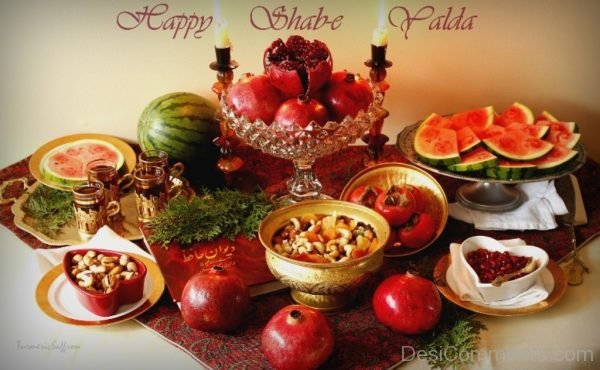
Shab-e-Yalda - an ancient winter solstice celebration that commemorates the triumph of Mithra
Ancient Persians believed that evil forces were dominant on the longest night of the year and that the
next day belonged to the Lord of Wisdom, Ahura Mazda.
‘Because Shab-e Yalda is the longest and darkest night, it has become to symbolise many things in Persian poetry; separation from a beloved one, loneliness and waiting. After Shab-e Yalda a transformation takes place - the waiting is over, light shines and goodness prevails...'Continue to read: Happy Shab-e Yalda: When Light Shines and Where Goodness, Beauty and Wisdom Prevails
…...
And now a few related postings from the GCGI Archives:
Wisdom of the East: Love and Wisdom of Sufism, Rumi and Hafez
Shahnameh: The Epic of the Persian Kings
The Last Persian Prince of Poetry: The Living Legacy of Malek o' Shoara Bahar
My Poem of the month (October): MORḠ-E SAḤAR (Bird of Dawn)
Modern Iran: The Most Misunderstood Country
The Art of Persia: The Everlasting Magnificent Story of Beauty, Wisdom and Love
Finding sanctuary in poetry during lockdown
Reflecting on Life: My Childhood in Iran where the love of poetry was instilled in me
Poetry is the Education that Nourishes the Heart and Nurtures the Soul
Cradle of god: Spirituality in the Land of the Noble
Revisiting the Persian cosmopolis: The World Order and the Dialogue of Civilisations
Zoroastrianism the ancient religion of Persia that has shaped the world
The healing power of ‘Dawn’ at this time of coronavirus crisis
Simorgh tells me: We are the leaders we have all been searching for
- Details
- Written by: Kamran Mofid
- Hits: 1676
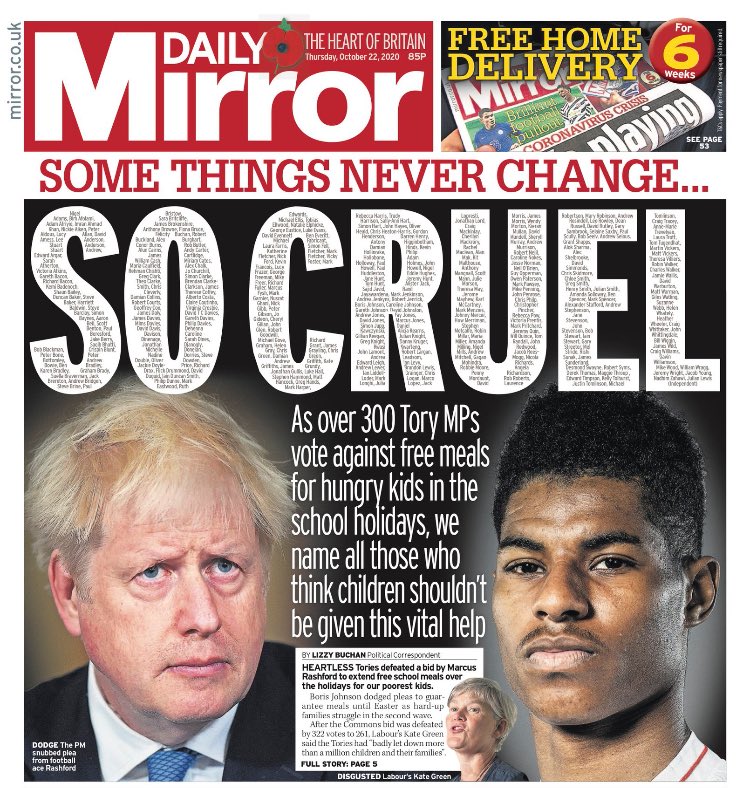
The GCGI salutes and pays tribute to Marcus Rashford and his powerful campaigning to provide food and hope for the hungry children. His advocacy for children and young people has been a source of inspiration and encouragement in these difficult times. We are proud to stand with him on this issue.
Childhood hunger is an issue that should transcend politics and ideology
'This is not about politics, it's about humanity'
The Tories rejected and defeated the Labour motion in support of Marcus Rashford’s call on providing
1.4m disadvantaged children in England with £15-a-week food vouchers during holidays until Easter 2021.
Cruel? For sure. Unforgivable? Beyond doubt.
‘UK's 'cruel and harmful policies' lack regard for child hunger.’- Human Rights Watch
A cabal of upper-class sadomasochists, plotting ever more devious ways to hunt children, single parents, the disabled, the youth, working poor, the old and
vulnerable,..., like foxes,- the cruel blood-sport that they love.
Why? Just why do they do it? Why do they hunt, humiliate, hurt and punish a very large segment of their own fellow citizens? Why?
It is so very heartbreaking that a bunch of out of touch, born with silver spoons in their mouths, the so-called posh boys, members of The Nasty Party, have given the nation extreme poverty and inequality, austerity and inhumanity, Brexit and dictatorship, lies, cheating and mistrust.
And equally, saddened and distorted that a large number of people have acted against their own self interest and have voted for them!!
I suppose for all these, the Posh Boys, are indebted to Murdochism and neoliberalism which they worship!
THE SHAME OF CHILD POVERTY IN THE WORLD’S 5TH RICHEST NATION
Voting against free school meals shames Britain- Photo:Chronicle Live
‘What kind of party opposes feeding hungry children in the middle of a pandemic? And what kind of politicians take the opportunity for snide remarks about those seeking to help them? “You know what some people call us,” Theresa May told the Conservative conference 18 years ago: “The nasty party.”
Nota bene
A government/political party drunk on market values, guided by cruel machinery of exploitation, racism, class division, austerity, cruelty, aggression, that humiliates it’s innocent, weak and vulnerable citizens, with neoliberalism, poverty, inequality and food banks and celebrates extreme individualism, feral competition, worship of mammon, rat-race to a success that it can never deliver and ignores the struggles and plight of its children and youth, ceases to be civilised and sooner or later ceases to exist morally or spiritually.
A journey through a land of austerity, poverty and inequality: Welcome to Britain
Poverty, Destitution, Hunger and Homelessness in the Midst of Plenty
This is nothing, but a manifestation of a cruel, inhumane, and mean government
Hungry and Homeless Children of ‘Great Britain’ growing up in Shipping Containers
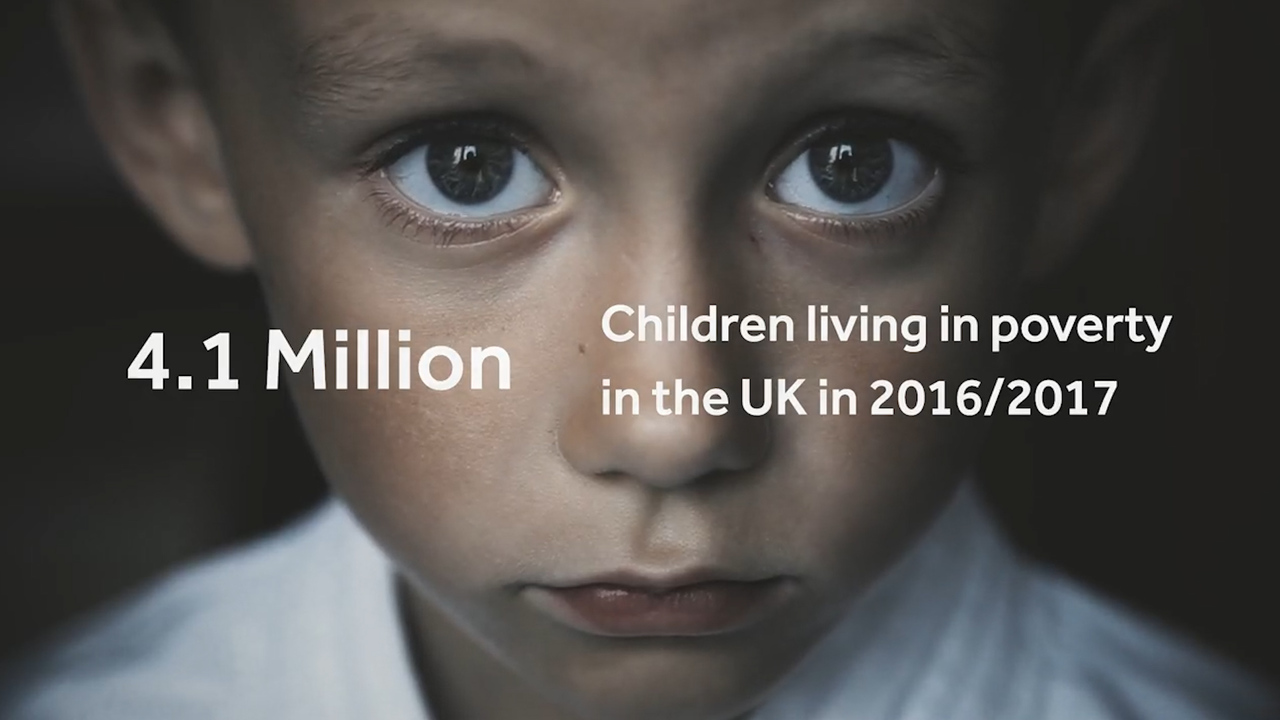
'In Britain, the government’s ideological austerity agenda has contributed to plunging 4.1 million children into poverty. This means insecure accommodation, cold homes and not enough to eat – and young people absorb all of this stress. The anxiety of living like this should not be underestimated as a factor in the rise of self-harm behaviours. Worries about exams, university applications and job prospects all loom large too, particularly in a world where employment options are too often limited and precarious.'
This, surely, must be, a lasting shame and scar on the conscience of Britain
Where has the ‘Posh Boys’ (Tory Party’s) moral compass gone?
From hubris to nemesis: the Conservative Party and Britain in crisis
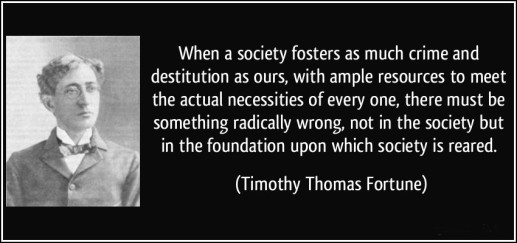
Photo: Poverty in the UK is violating human rights.
‘government meanness, public kindness’*
‘What kind of party opposes feeding hungry children in the middle of a pandemic? And what kind of politicians take the opportunity for snide remarks about those seeking to help them? “You know what some people call us,” Theresa May told the Conservative conference 18 years ago: “The nasty party.”
Child food poverty means both present misery and future disadvantage. Marcus Rashford’s non-partisan campaign was compelling enough to force the government to U-turn this summer, agreeing to pay for vouchers to feed those on free school meals over the holidays. Yet this week it set its face against his call for an extension. Though five Tories backed Labour’s motion on the issue – one resigning from a government post to do so – 322 others voted against. Some added cheap jibes (“virtue-signalling”) at a man whom the government gave an MBE for his campaigning.
There has long been an audience for divisive rhetoric directed against immigrants and families on benefits (most of which are working households). Yet there was widespread revulsion at Wednesday’s vote. Even Nigel Farage chipped in to observe that voting the extension down “looks mean and is wrong”.
Racist responses to Marcus Rashford's campaign for children are no surprise
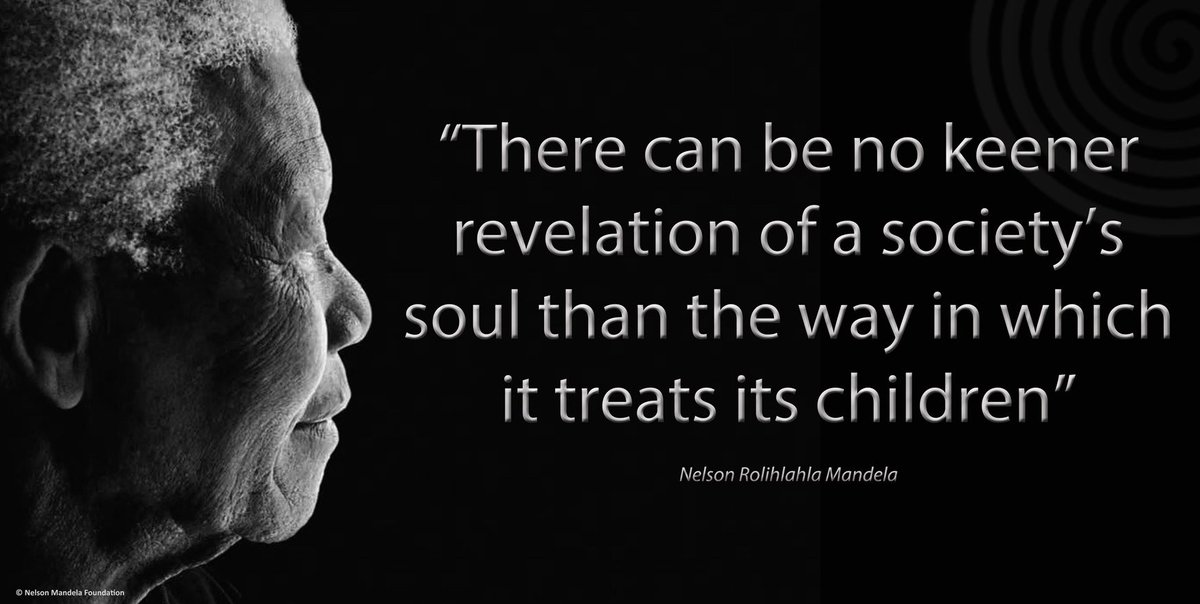
Not everyone will be familiar with Nelson Mandela’s observation that the keenest revelation of a society’s soul is the way it treats its children – but most will share his instinct. They can do the maths: more than £6,000 a day for consultants on a failing test-and-trace system versus £15 a week for food vouchers; £522m for the “eat out to help out“ scheme, subsidising those who can afford restaurant meals, versus £24m to feed children who can’t. And they will wonder why England won’t pay when Northern Ireland will do so, and Wales and Scotland have committed to pay until spring next year. The decision is all the more worrying as demand for free school meals soars, and downright odd on the eve of the chancellor’s announcement of a multibillion-pound package for businesses and workers, recognising that these are extraordinary times and that the economic crisis is only beginning.
The Nasty Tories Vs The Kind People
The outpouring of help from hundreds of businesses around the country is a visceral reaction to government meanness, as well as a welcome testament to people’s decency and generosity. Cafes, takeaways and pubs that are struggling due to Covid-19 restrictions have nonetheless promised free meals to those who would otherwise go without. What a contrast with the MPs who implied that parents were irresponsible and spoke of “nationalising children” and deepening dependency. Extraordinarily, one suggested that many of his constituents “would be appalled by the government interfering in their daily lives to ensure that their children do not go hungry”.
Many Conservatives expressed concern about hardship. They are right that more fundamental solutions than holiday schemes are needed. But years of Tory government have brought sharp rises in child poverty, thanks to measures such as the two-child limit on benefits. In one of the richest countries in the world, 4.2 million children are living in poverty: 600,000 more than in 2011-12. Even before the pandemic, that figure was projected to rise by another 1m by 2022, to 5.2 million. The MPs who say that schools should not have to feed children forget that many are already forced to do so. Local authorities who have seen their funding slashed by austerity are stepping into the breach too.
In the past, the Conservatives’ reputation for callousness was matched by a belief in their competence. That is being demolished by this pandemic. Even Boris Johnson was finally forced to admit to shortcomings in his “world-beating” £12bn test-and-trace system this week, as contact tracing fell to a new low and waiting times for test results soared to almost double the target. This is a post-shame government, brazening out its failures, untruths and sheer cruelties, assured in its vast majority and the distance of the next general election. How rich that Conservatives should lecture struggling families on responsibility, while refusing to take any themselves.’
*Editorial, The Guardian, 23 October 2020
......
After Boris Johnson’s COVID-19 recovery and discharge from hospital, I wrote him a public letter, pleading with him to change his ways and become A Man For The Common Good. As it happened, it was, nothing, but a wishful thinking on my part! He proved to me that, yes, indeed, leopards can never change their spots!
Boris for the Common Good! How miraculous that can be! God must have saved you for something good!
……
What if Britain like New Zealand had opted for Politics And Economics As If People Mattered To Focus On Empathy, Kindness and Well-Being
This is why every country needs a Jacinda Ardern to discover What it Means to be Human and Great
…...
'A HARD RAIN'
Driven and Fueled by the Lies of the Past-
‘Johnson, Gove and Cummings Drive Britain Towards Elective Dictatorship.’
The Posh Boys Destroying this Green and Pleasant Land
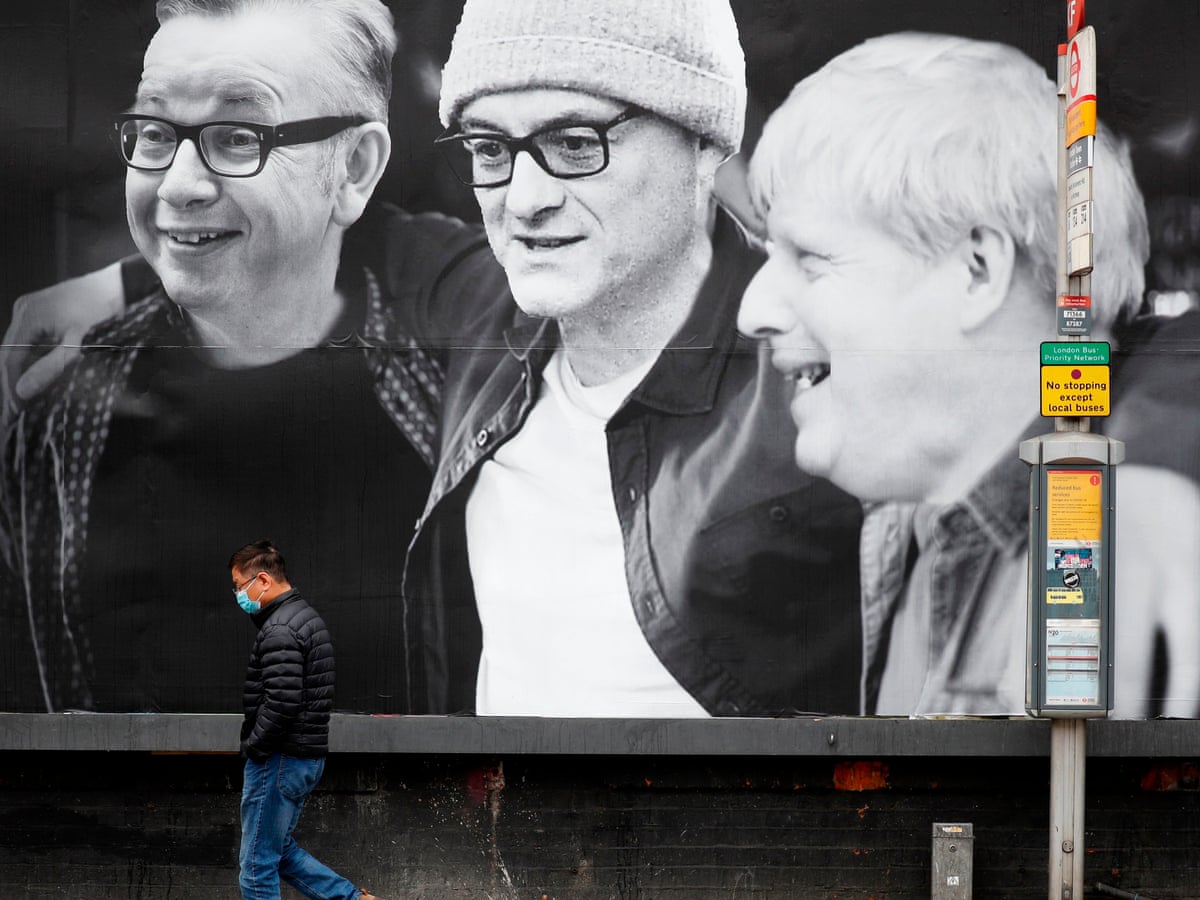
A poster in Kentish Town, north London, mocks Michael Gove, Dominic Cummings
and Boris Johnson. Photo: Tolga Akmen, via The Guardian
‘Britain is changing from a parliamentary democracy towards an elective dictatorship faster than people realise after Boris Johnson’s election victory…’-Brexit and Dictatorship
......
...And finally, the fundamental questions at this moment are: Can Britain be reformed? Can this huge and immoral inequality be tackled and reversed? Can people live happily? Can Britain become democratic again?...
The answer to my mind is an emphatic NO, unless the following is understood and addressed accordingly:
To reverse this destructive path we need a different model of education and we need a different economic value and economy. However, these are not possible to achieve so long as The Fraudulent Ideology reins supreme. Full stop. Carpe Diem!
Why Love, Trust, Respect and Gratitude Trumps Economics
See also:
"Sharing the Wisdom, Shaping the Dream:
Reclaiming the Moral and Spiritual Roots of Economics and Capitalism"
By The Reverend Canon Dr. Vincent Strudwick
And
Wisdom and the Well-Rounded Life: What Is a University?
- This is why every country needs a Jacinda Ardern to discover What it Means to be Human and Great
- A Prophetic Message to People Living in the Year 2959
- Brexit and Dictatorship
- Labours of Love: A Humbling Book about Care
- How to Lead With Emotional Intelligence and Emotional Education for a Fulfilling Life